

Rain on Your Wedding Day in Florida? Here's What Actually Happens
About the photos: these are from weddings I shot in Connecticut, before I moved to Sarasota. Rain looks like rain everywhere. The planning advice is Gulf Coast specific.
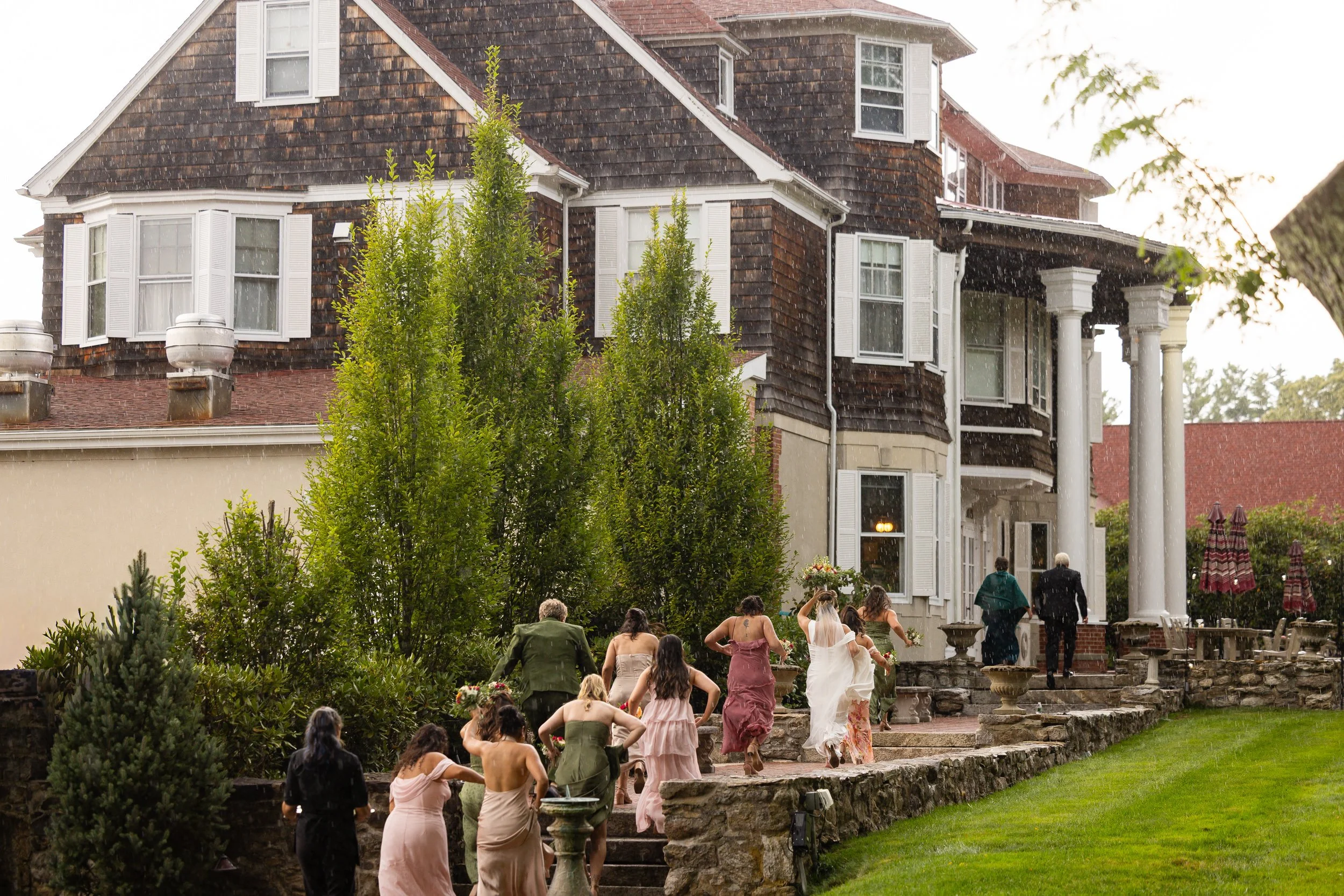
Yes, it might rain on your wedding day. Between June and September on the Gulf Coast, it probably will at some point.
Here's the part nobody mentions: it usually doesn't last. These storms build in the afternoon heat, dump a lot of water fast, and move on. Most of the weddings I've shot in rain were rained on for about twenty minutes.
And those twenty minutes tend to produce the photos couples talk about a year later.
How likely is rain, actually?
Not "it rains a lot in summer." Real numbers. These are NOAA's 1991–2020 normals for Sarasota, and the second column is the share of days that see measurable rain.
Month Rainfall Days with rain
| Month | Rainfall | Days with rain |
|---|---|---|
| November | 1.90 in | 18% |
| April | 2.46 in | 19% |
| February | 1.99 in | 24% |
| June | 7.38 in | 42% |
| September | 6.58 in | 45% |
| July | 7.55 in | 49% |
| August | 8.39 in | 56% |
A November wedding has about a one-in-five chance of seeing rain. August is worse than a coin flip.
But read that column carefully. A day with measurable rain is not a day that got rained out. In August it means a storm turned up somewhere in twenty-four hours. It doesn't mean grey from morning to night. That difference is most of the anxiety, right there.
Rainy season isn't one thing
People say "rainy season" like it's a single block. The National Weather Service splits it into three, and they behave differently.
Late May into June is when the severe stuff happens — hail, damaging wind, waterspouts. Less total rain than midsummer, but the worst individual storms.
July into early September is the peak. Frequent afternoon storms, but at least the pattern is predictable.
Mid-September into early October is tropical systems, and it's the most variable stretch of the year. Hardest to plan around.
Southwest Florida's rainy season officially runs May 15 to October 15. So early June and late September carry genuinely different risk, even though both sit inside it. Worth knowing if you're choosing between them.
For context: Tampa has historically averaged around 83 thunderstorm days a year, more than any other major US city. Sarasota sits in the same pattern. Storms aren't unusual here. Everyone who works weddings in this market has a plan for them.
What time is your ceremony?
This is the most useful thing on this page and almost nobody says it.
Gulf storms are an afternoon thing. They build through the heat and usually break mid-to-late afternoon.
A 4:00 ceremony in August sits inside that window. A 6:30 ceremony often sits past it. Same date, same venue, same guests — different odds.
Moving a ceremony ninety minutes later costs nothing. It also drops your portraits closer to golden hour, which is where you want them anyway. If you're still picking a time, this one decision does more for your photos than most of the things you'll spend money on.
What a real rain plan covers
Most venues say they have one. Ask what's in it.
Where does the ceremony go? Not "inside" — which room, and does it hold your guest count with the chairs arranged how you want them?
Who calls it, and by when? Someone needs the authority and a deadline. Usually your planner, usually two to four hours out.
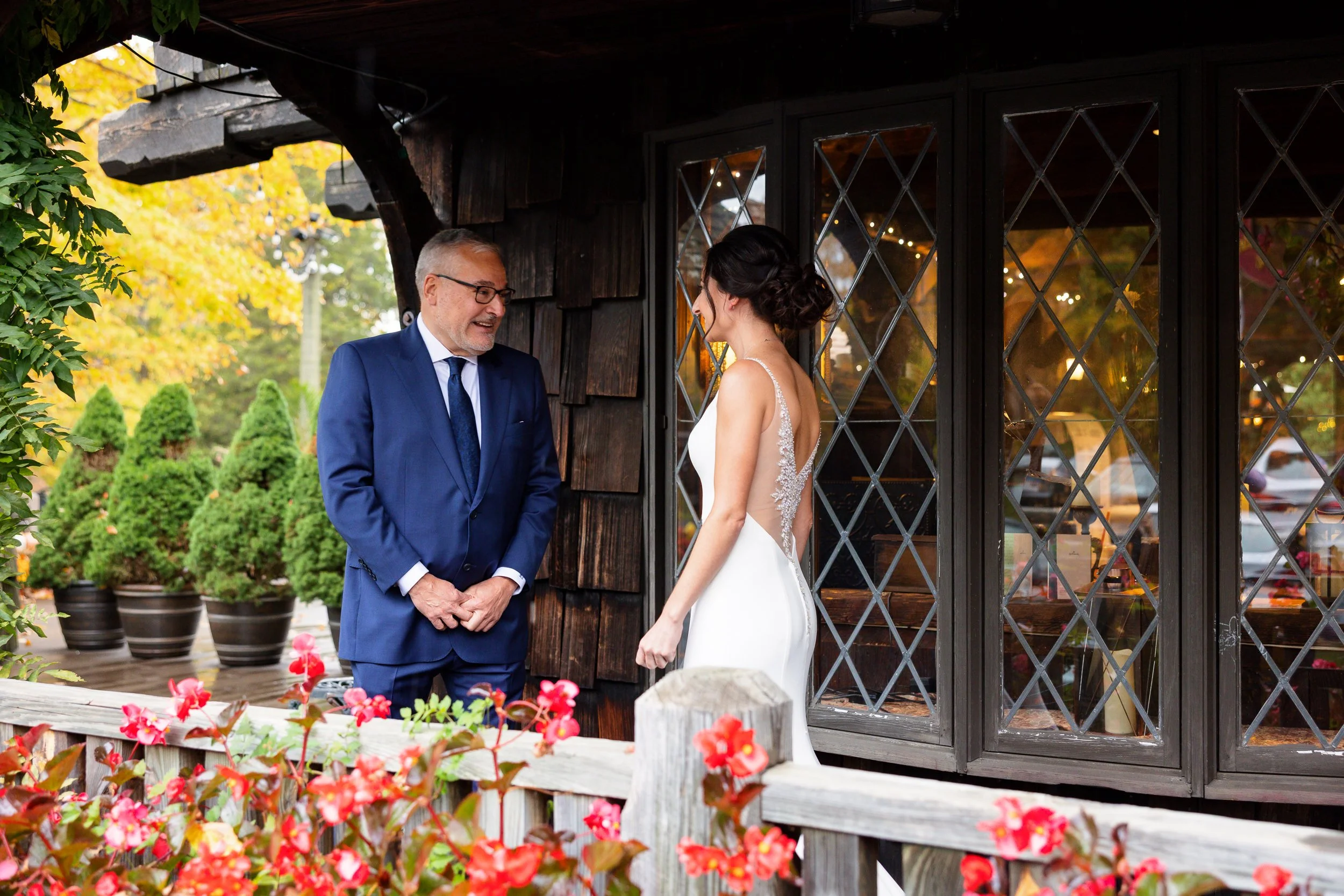
Where do portraits happen? This is the one everyone forgets. Covered porches, porticos, a lobby with a decent window. I scout these before every wedding whether rain's forecast or not.
Is there cover between buildings? Moving a hundred guests from ceremony to reception in a downpour is a logistics problem, not a photo problem. Still your day, still worth asking.
Umbrellas. Clear ones photograph much better than black. Ask your planner for a dozen. They're cheap, and they turn a scramble into a picture.
What about lightning?
Nobody writes about this, and it's the thing that actually stops a wedding.
Rain is a preference. You can get married in it if you want to. Lightning is a safety call, and it isn't yours — venue staff, and the county for beach ceremonies, will pause or move an outdoor ceremony when it's within a set distance. Most work on a "clear for thirty minutes" rule before resuming.
In the thunderstorm capital of the country, ask one question on your venue walkthrough: who makes the lightning call, and what happens when they do. Get a clear answer once and you never have to think about it again.
"But I don't want rainy photos"
Fair. Here's what actually happens.
Overcast light is better light. Direct Florida sun at 2pm is the hardest light there is — squinting, hard shadows, blown-out sky. Clouds turn the whole sky into a softbox. Colors get deeper and nobody's squinting.
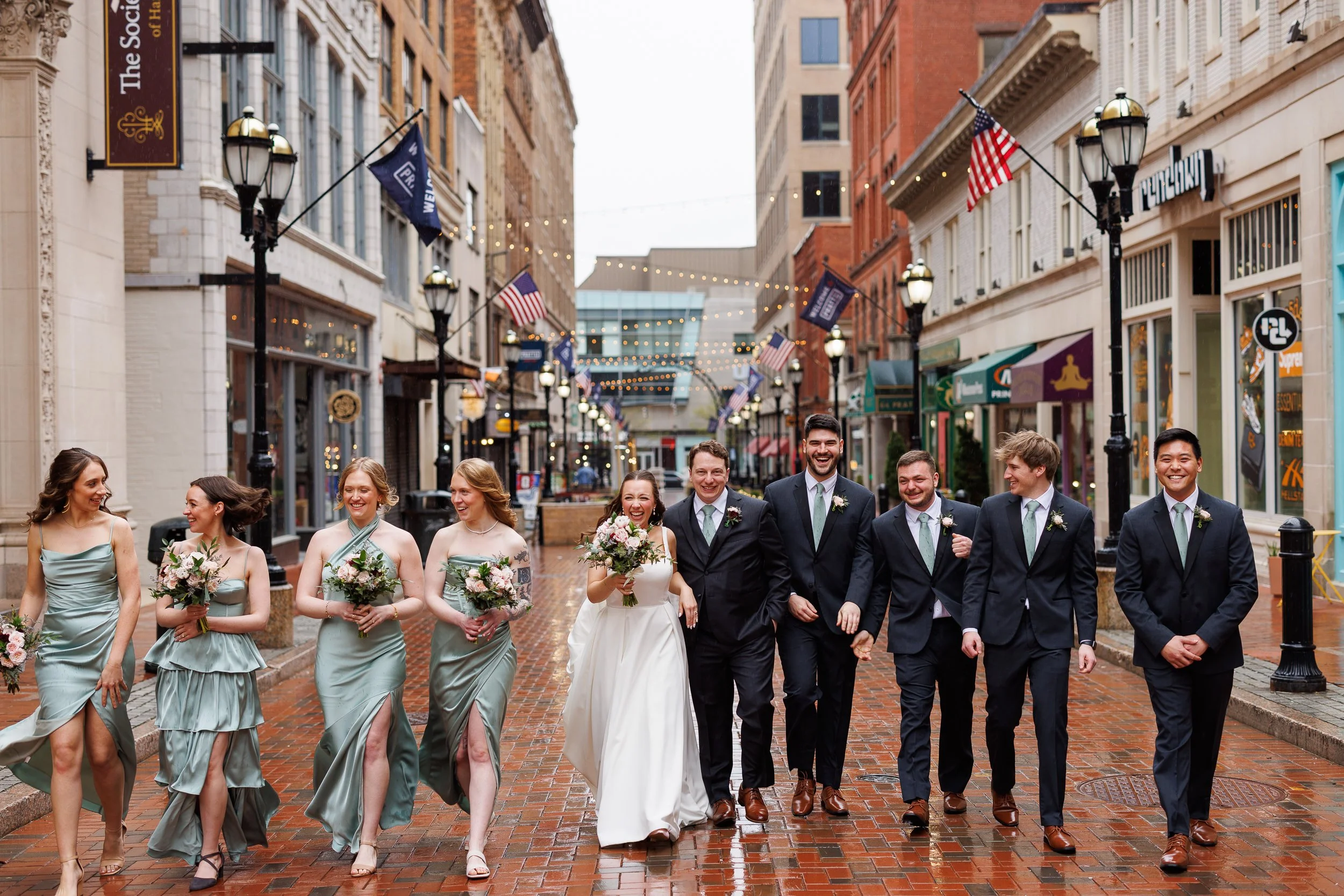
Rain also makes people stop performing. At one wedding the sky opened right as we finished bridal party portraits. The bridesmaids grabbed their dresses and ran for the building, laughing the whole way. That frame — mid-run, nobody composed — is one of the best pictures from the day, and it only exists because it rained.
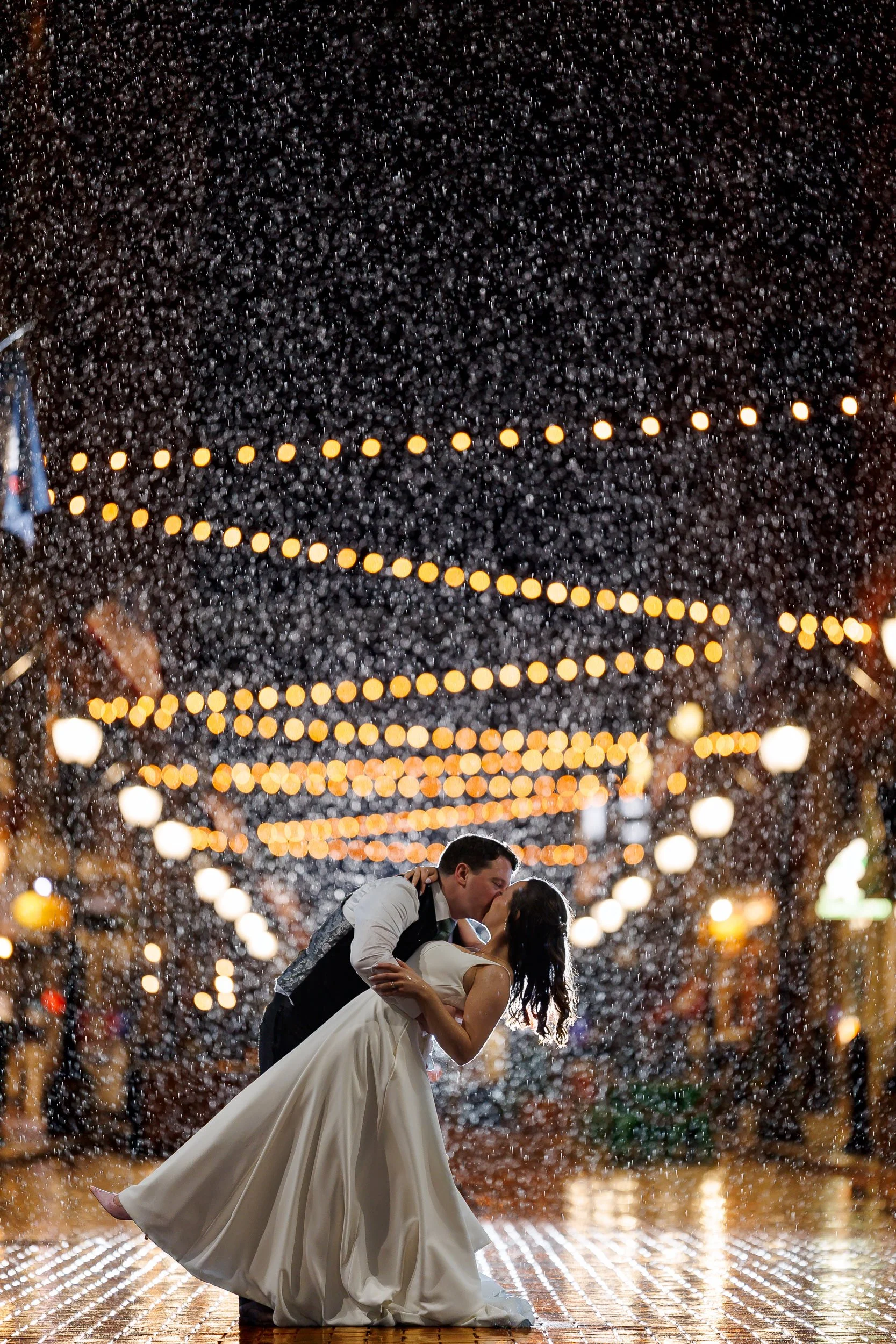
Storms buy you night portraits, too. At a waterfront wedding, rain arrived just as the reception got going. Everyone was already under the tent and it passed in minutes, but it gave us a reason to step out afterward with the bridge lit up behind them. Wet ground reflects light. Those are the ones they framed.
And moving inside isn't a downgrade. One wedding shifted to a fireplace after a morning of drizzle. Warm light, close quarters, everyone's face visible. It didn't look like a backup plan.
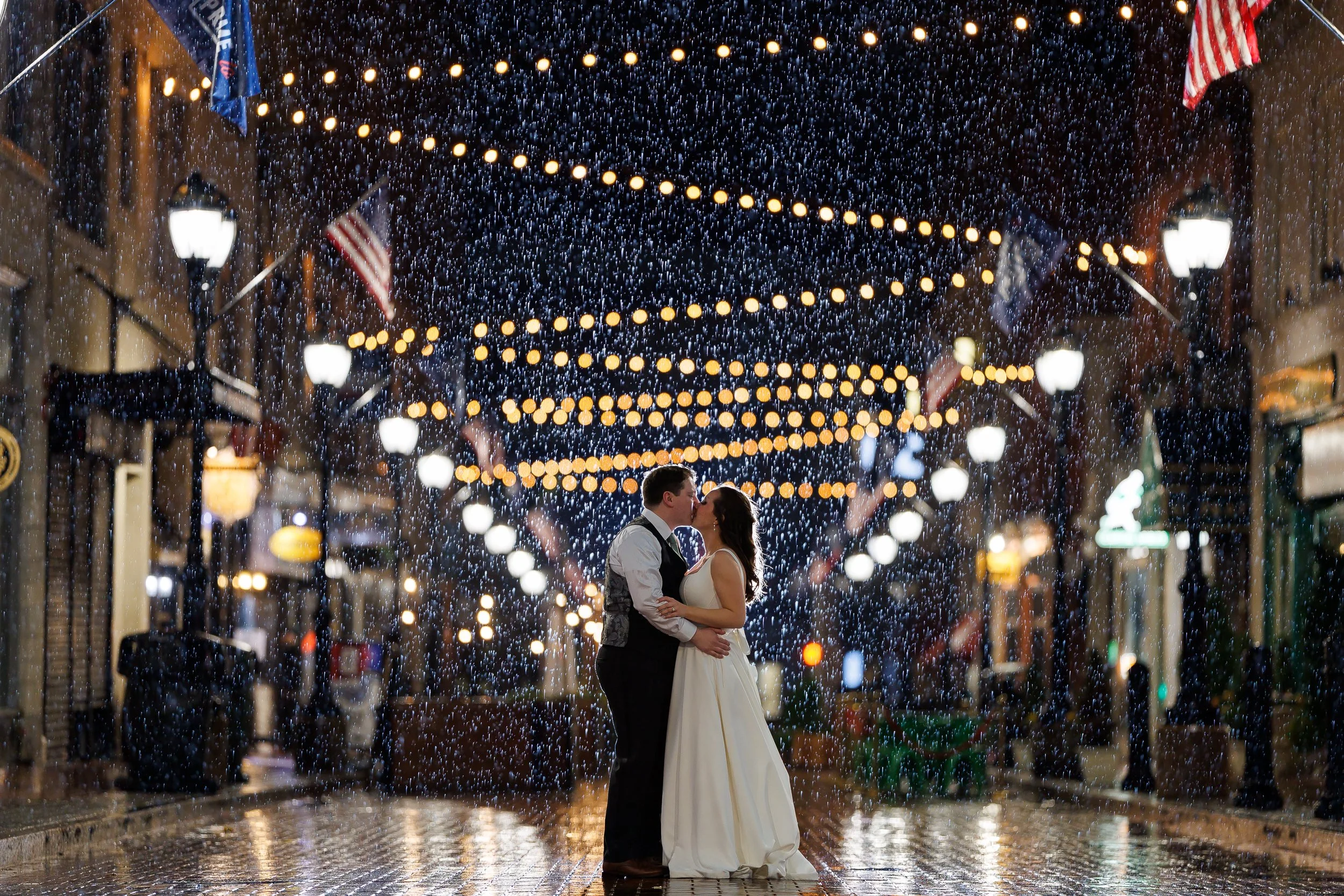
What I do when it rains
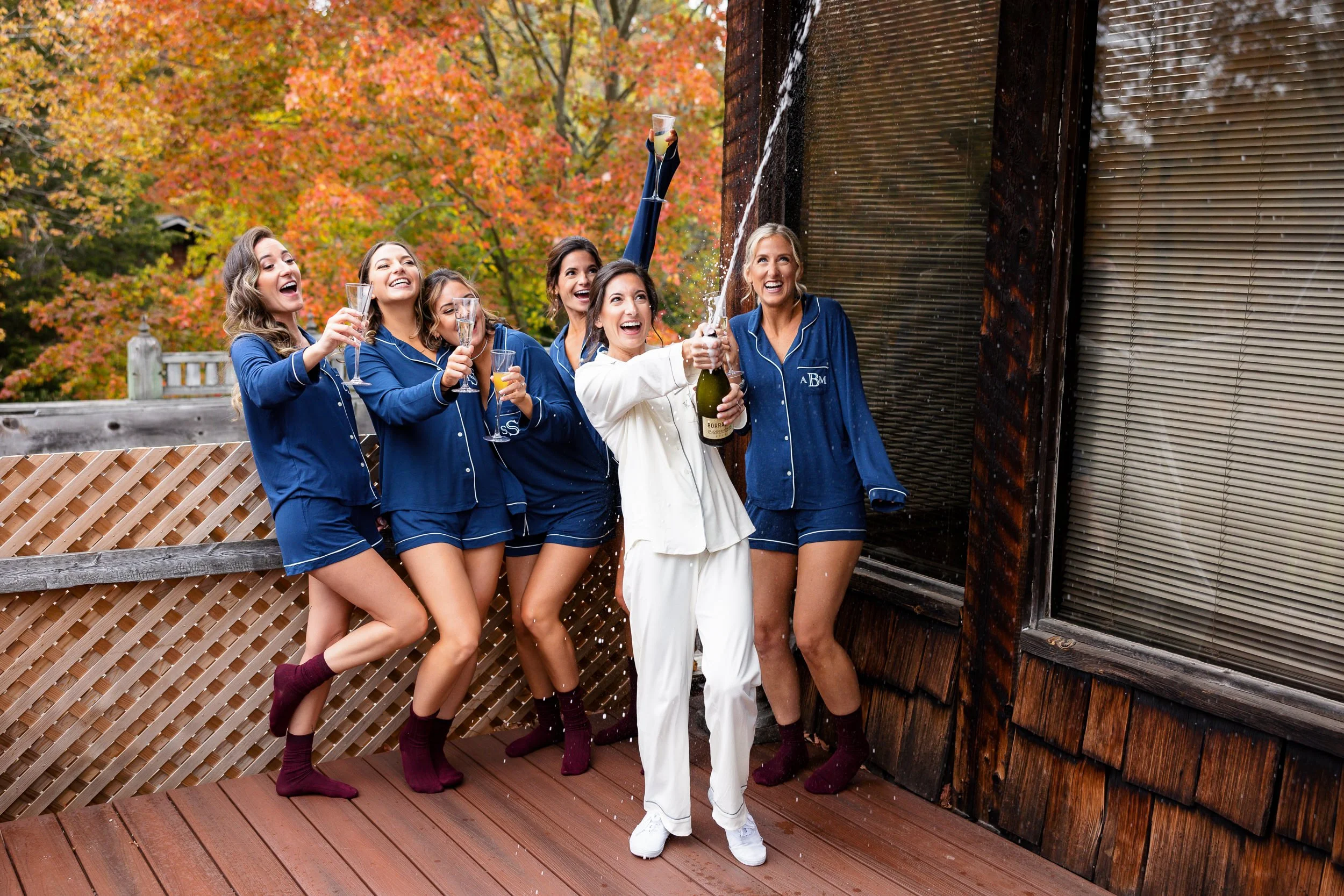
Honestly, not much differently. That's sort of the point.
I check radar that morning and again a few hours out, and I tell your planner what I'm seeing so the timeline can move. I've already scouted the covered spots. I carry rain covers and I shoot in it. And I watch for the break, because there's almost always a break — the champagne pop between showers is a real photo from a real wedding that drizzled all morning.
What I don't do is make the weather your problem. You've got enough going on.
The short version
Getting married on the Gulf Coast between June and September? Plan for rain. Pick a later ceremony time. Ask your venue the questions above. Buy the clear umbrellas.
Then stop thinking about it. Every wedding I've shot in rain turned out fine, and a few turned out better than they would have on a clear day.
Planning a Sarasota wedding and wondering about the weather?
If you're working through dates, ceremony times, or a rain plan and want a photographer's read on it, send me a note. I answer everything within 24 hours, and I'm happy to talk it through whether or not you end up hiring me.
Start a conversation → · See more real weddings → · Wedding investment →
