

Three Days for One Indian Wedding in Connecticut
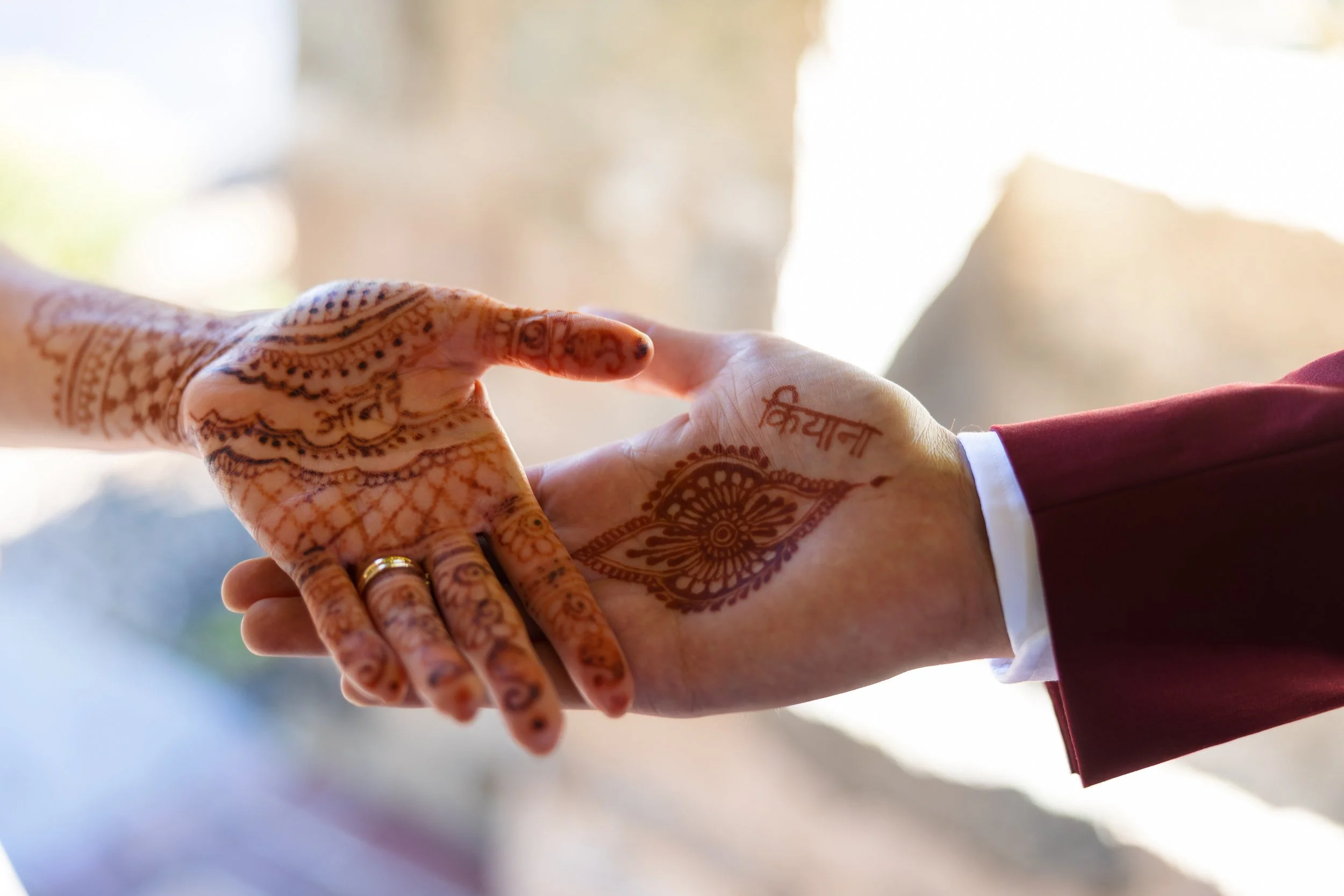
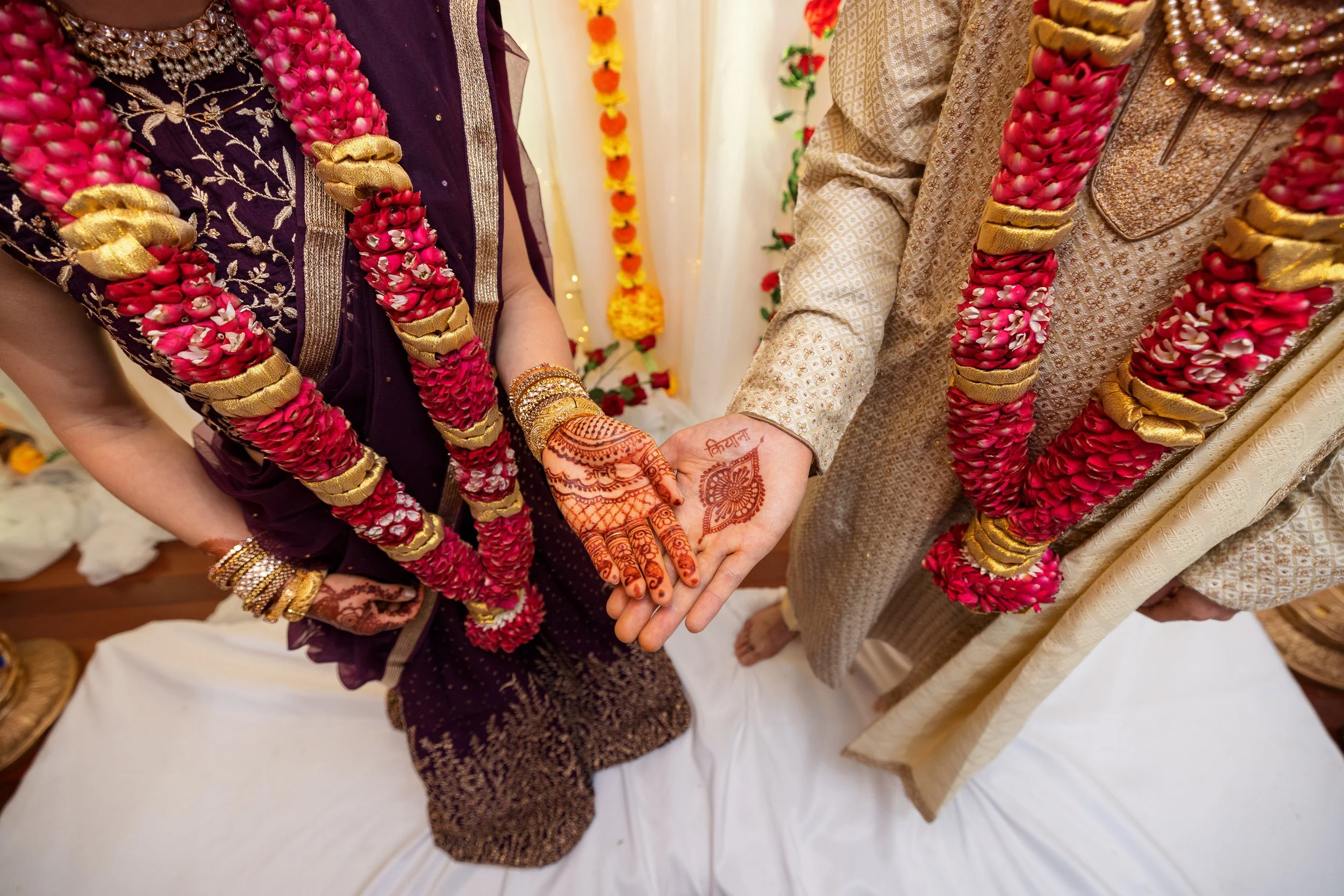
There's a frame from the third day where Anand and Keanna have their hands up against
the light, rings on, and the mehndi from Thursday still dark across her palms.
Three days, one wedding. An Indian wedding, in Connecticut, in October, across two
venues. That photograph is the only one with all of it in a single frame.
Thursday: the mehndi at Meadowbrook Estate
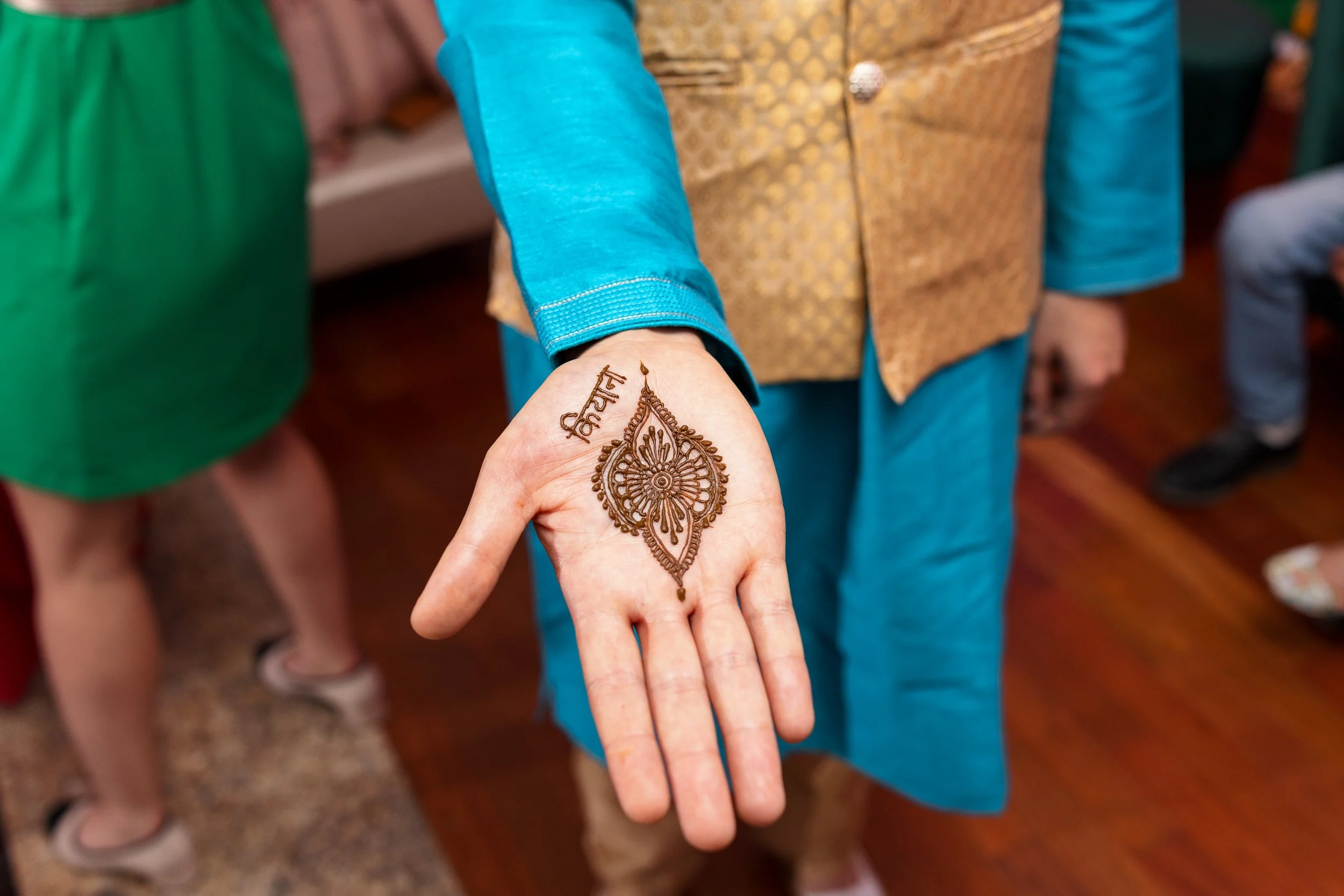
The mehndi is the henna. It happened at the Meadowbrook Estate in Marlborough, in a room
with a floral arch at one end and cushions on the floor.
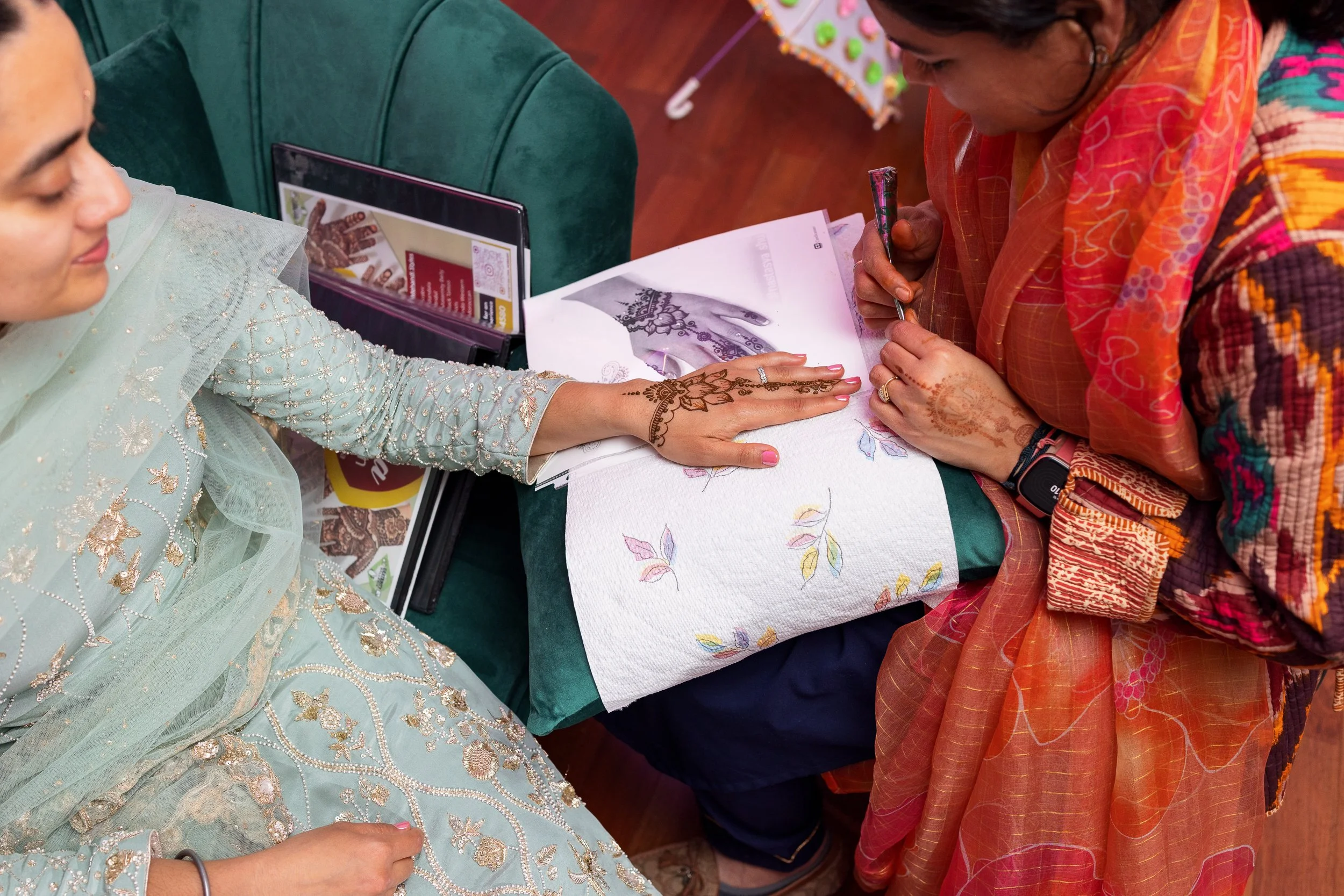
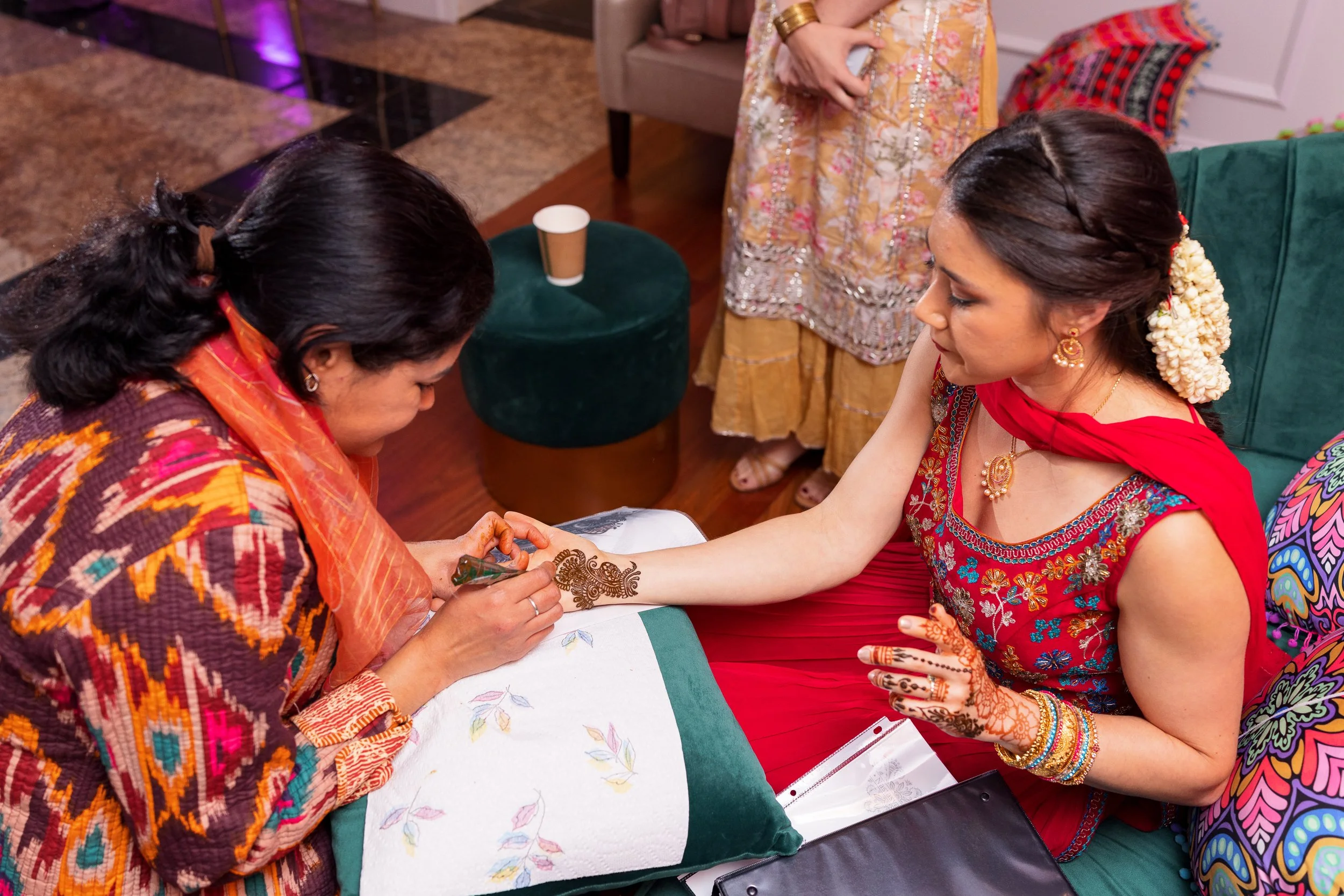
Intricate work, done by hand, and faster than I expected. I had it in my head as an
afternoon-long thing. It was more like thirty to sixty minutes a pair of hands, which
still means the bride is seated with her arms out for a long stretch while the party
carries on around her. Other people get henna too. Aunts, cousins, whoever sits down
next.
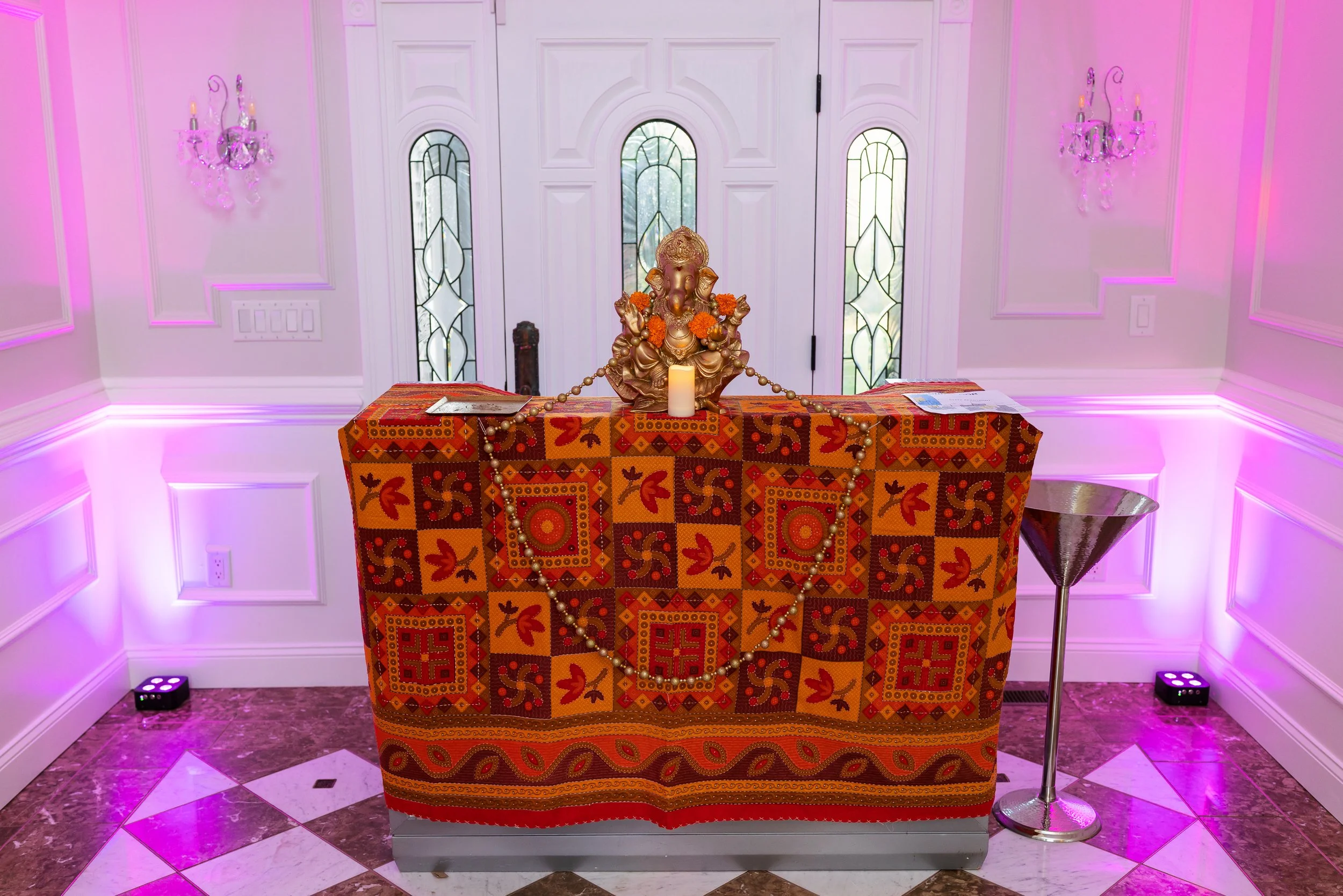
So you stop looking for the couple and start looking at the room. A silver tray of
offerings on the floor. A Ganesha on a side table with the lighting gone pink over it.
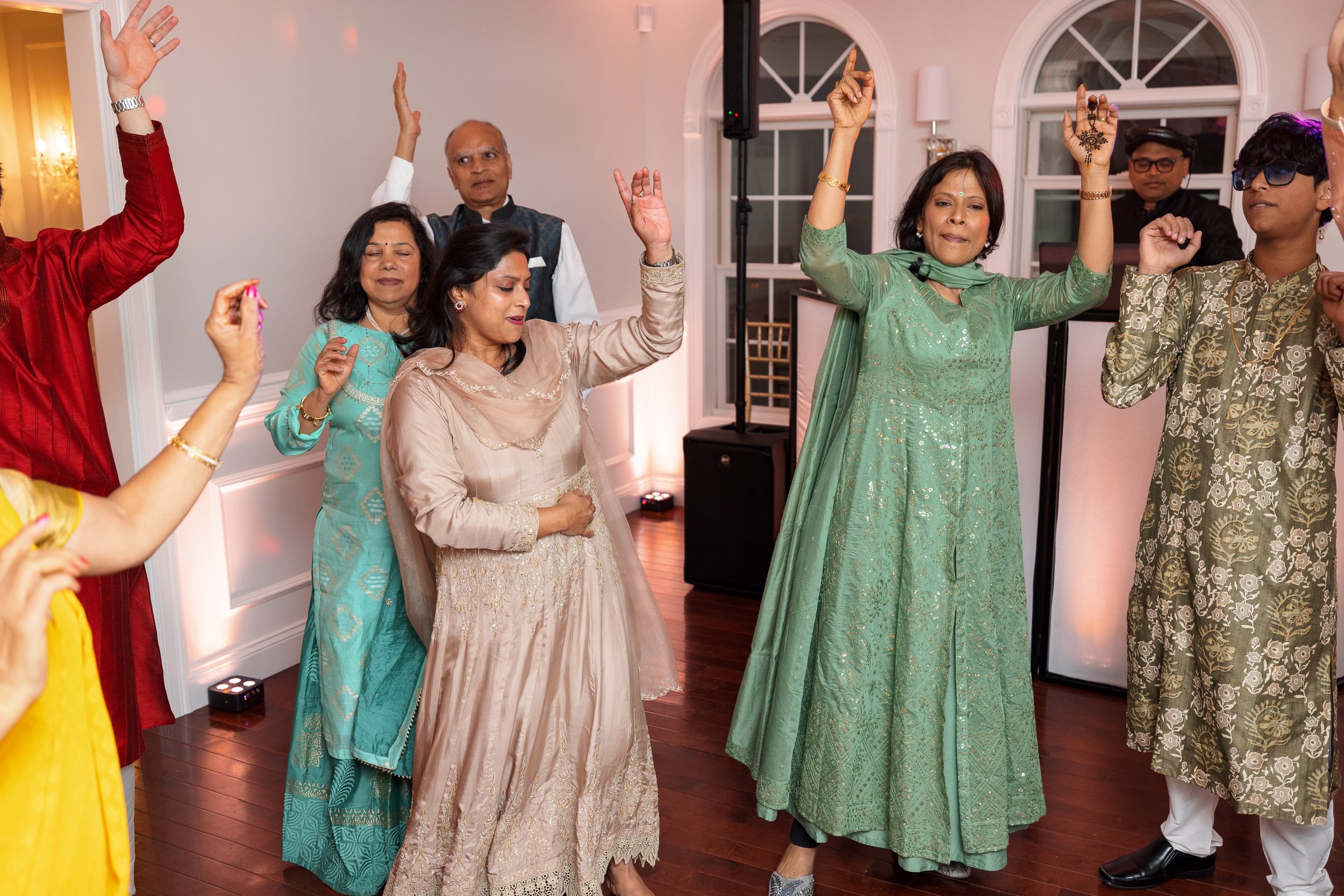
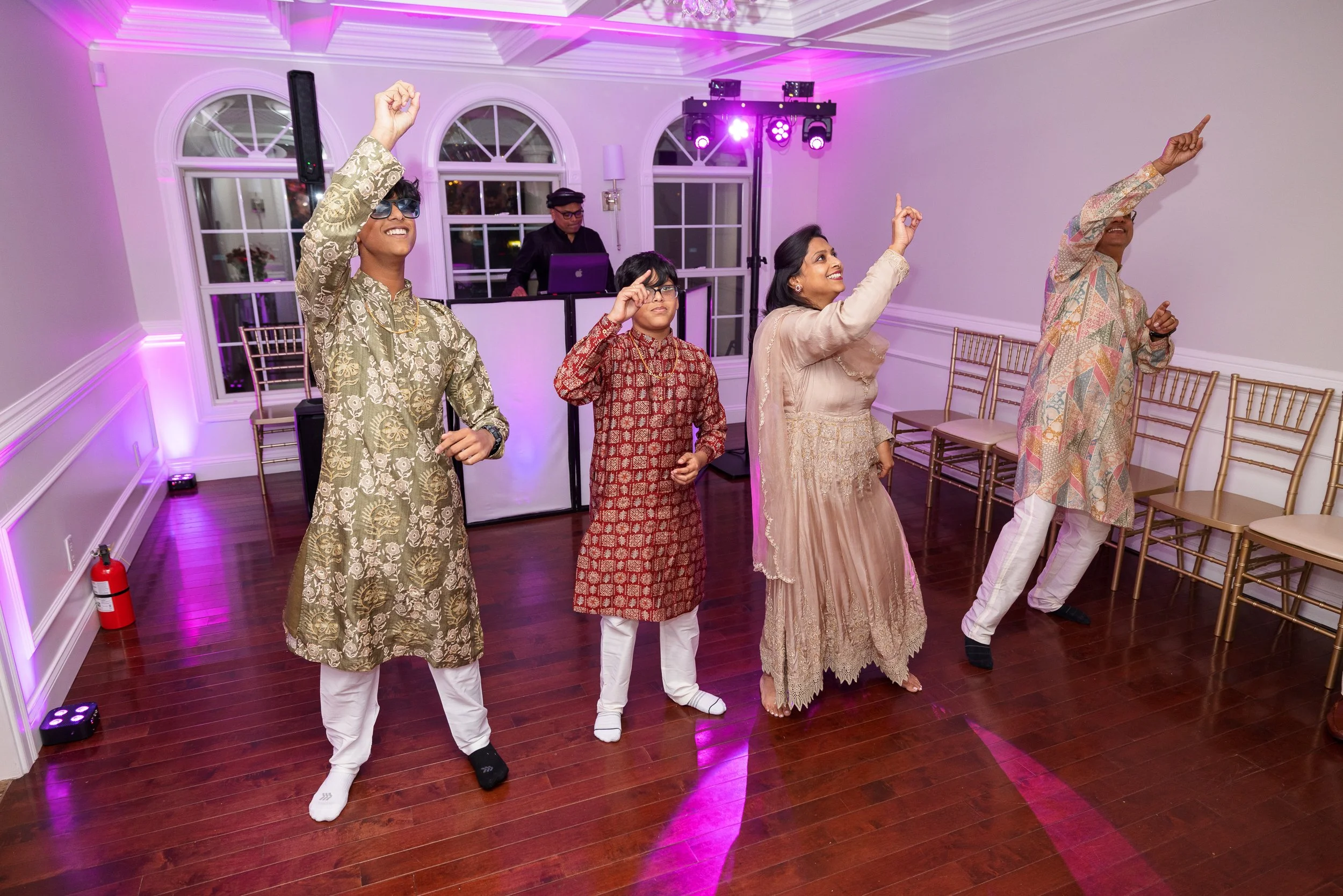
Dancing at the far end under purple lights while the drawing carries on at the other.
One family on Anand's side had put together a dance for the couple and nobody told me it
was coming, which I would rather have than the alternative. A surprise keeps you awake.
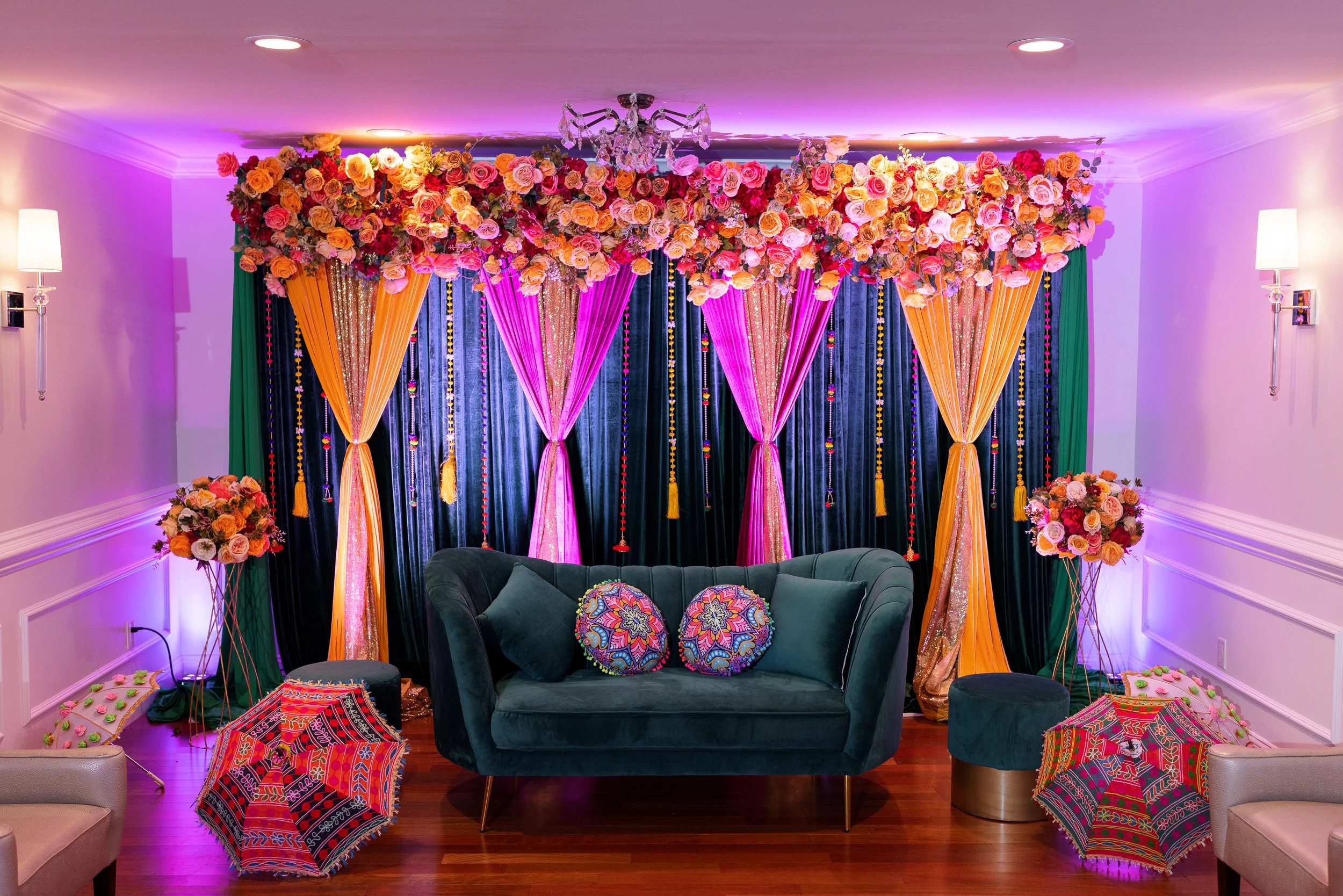
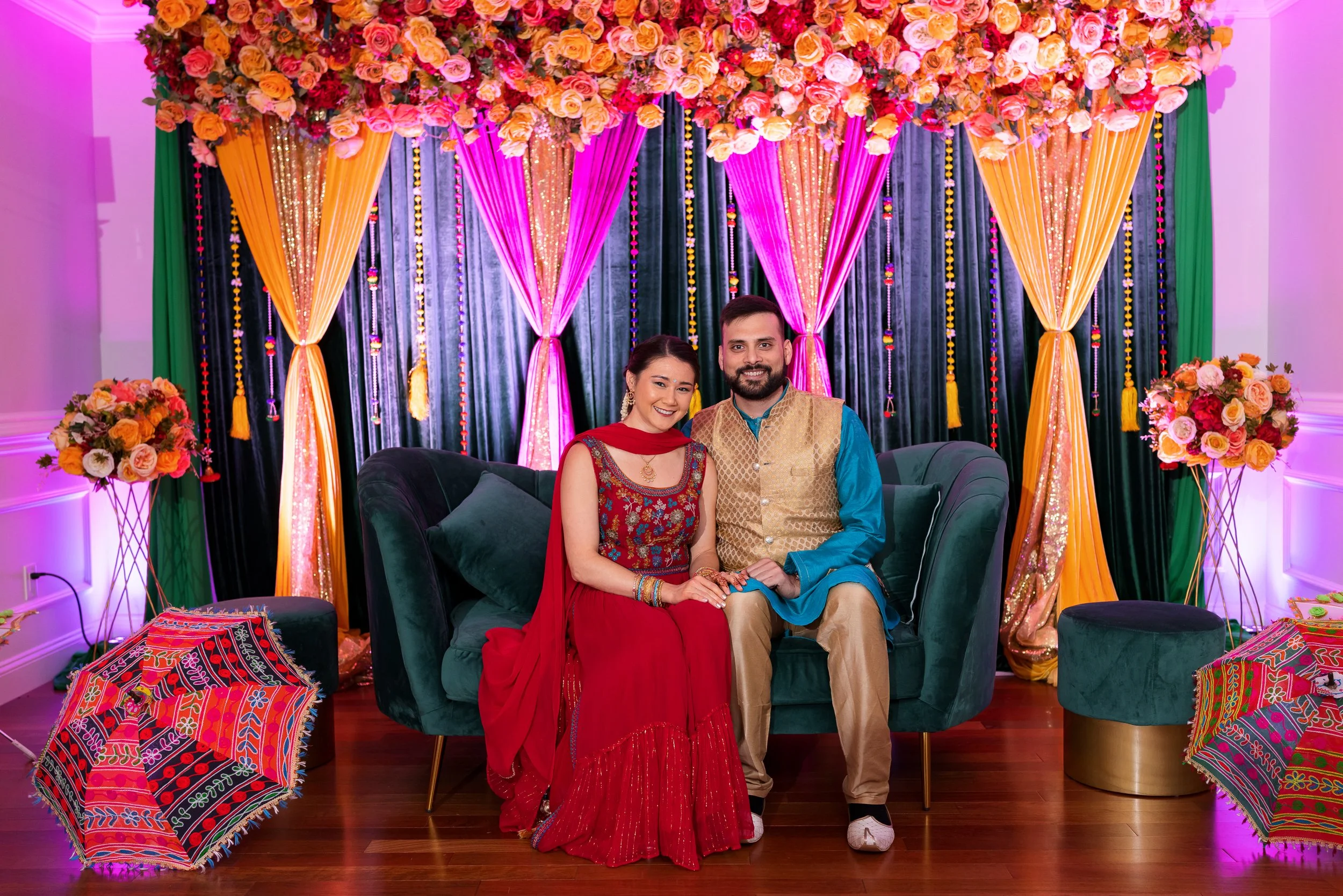
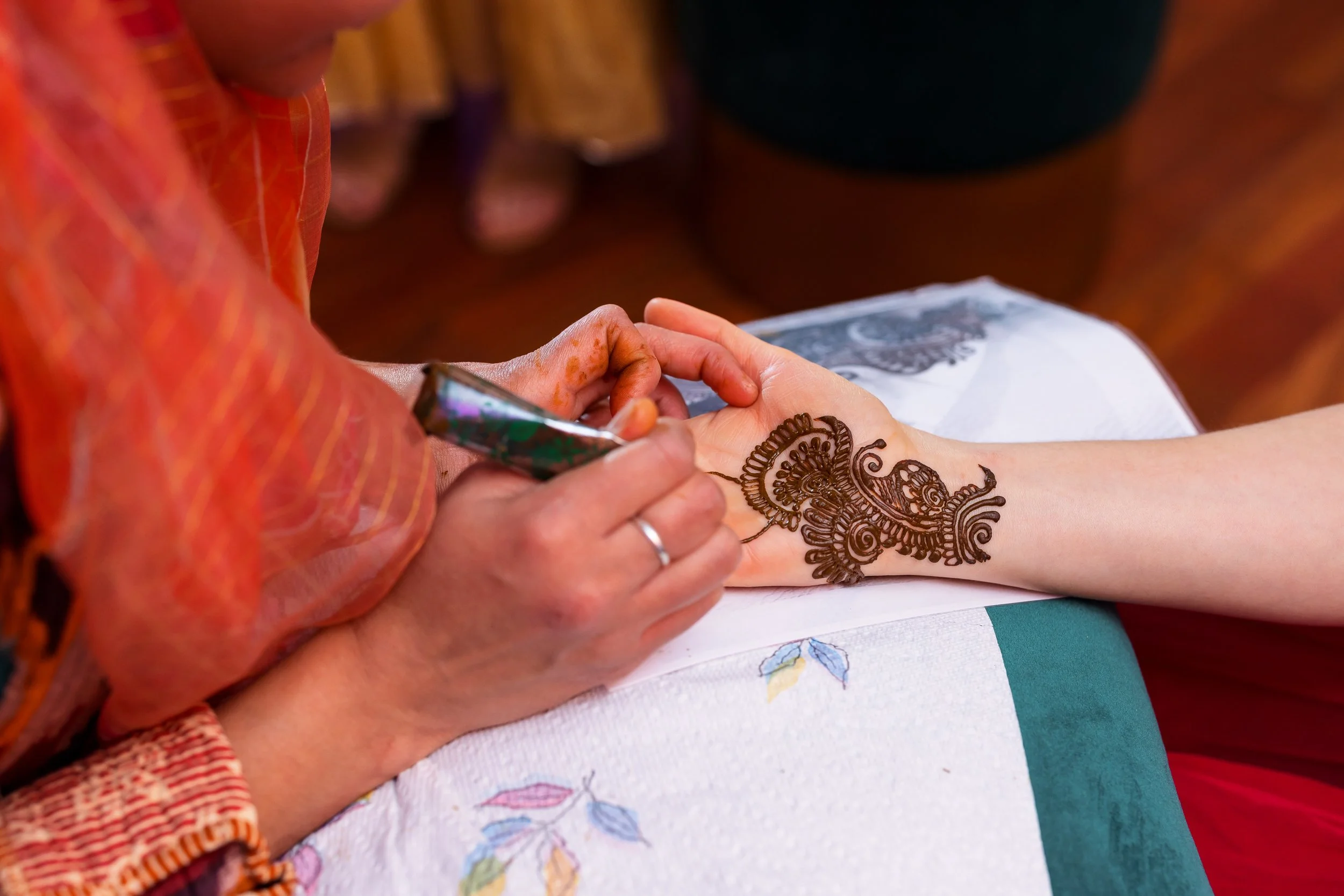
Then somebody holds up a finished hand, and you understand what the sitting still was
for.
Friday: the pooja
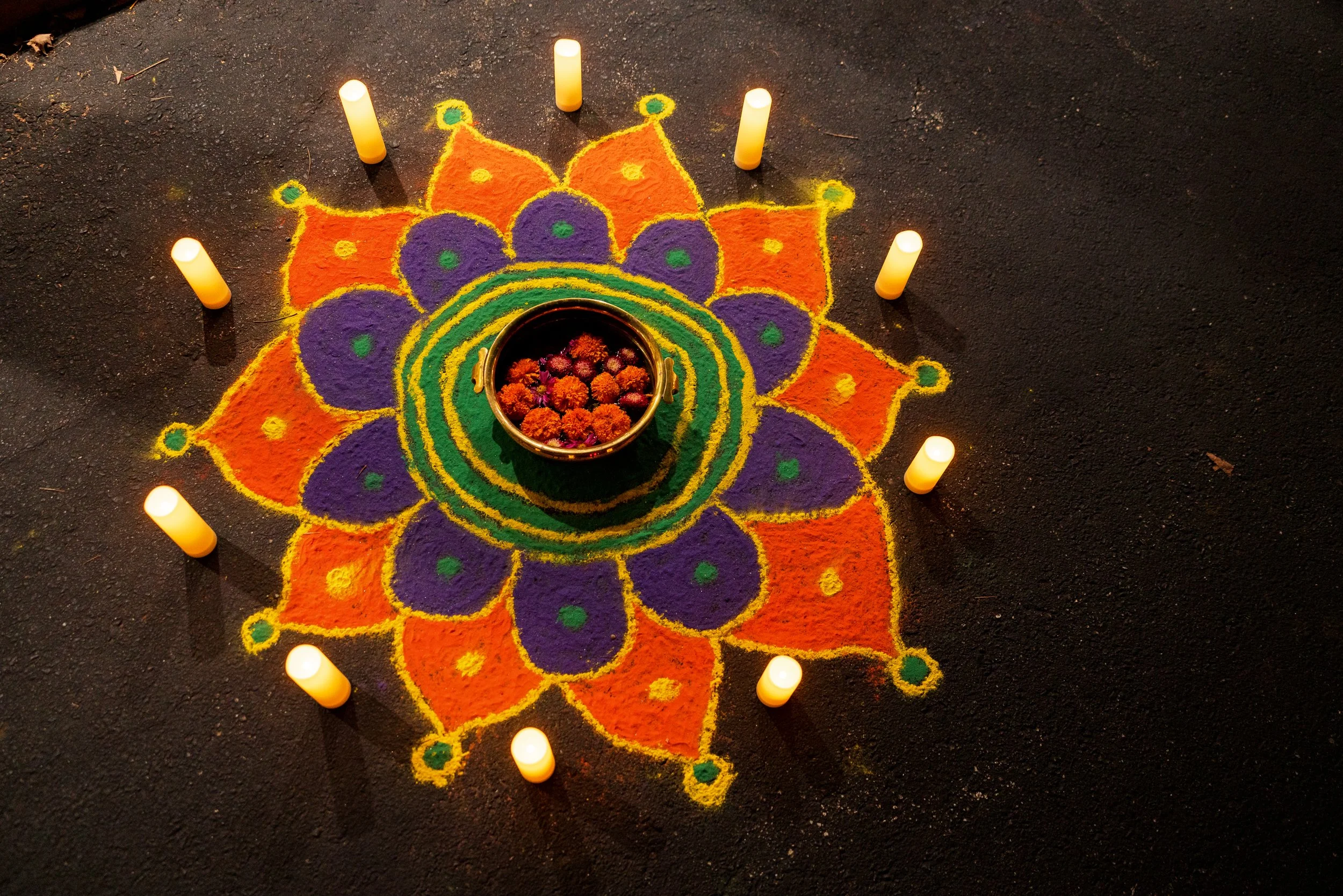
There was a rangoli on the driveway. Colored powder, candles set into it, out by the
entrance where people came in. That is the first thing you see and it tells you what
kind of day it is.
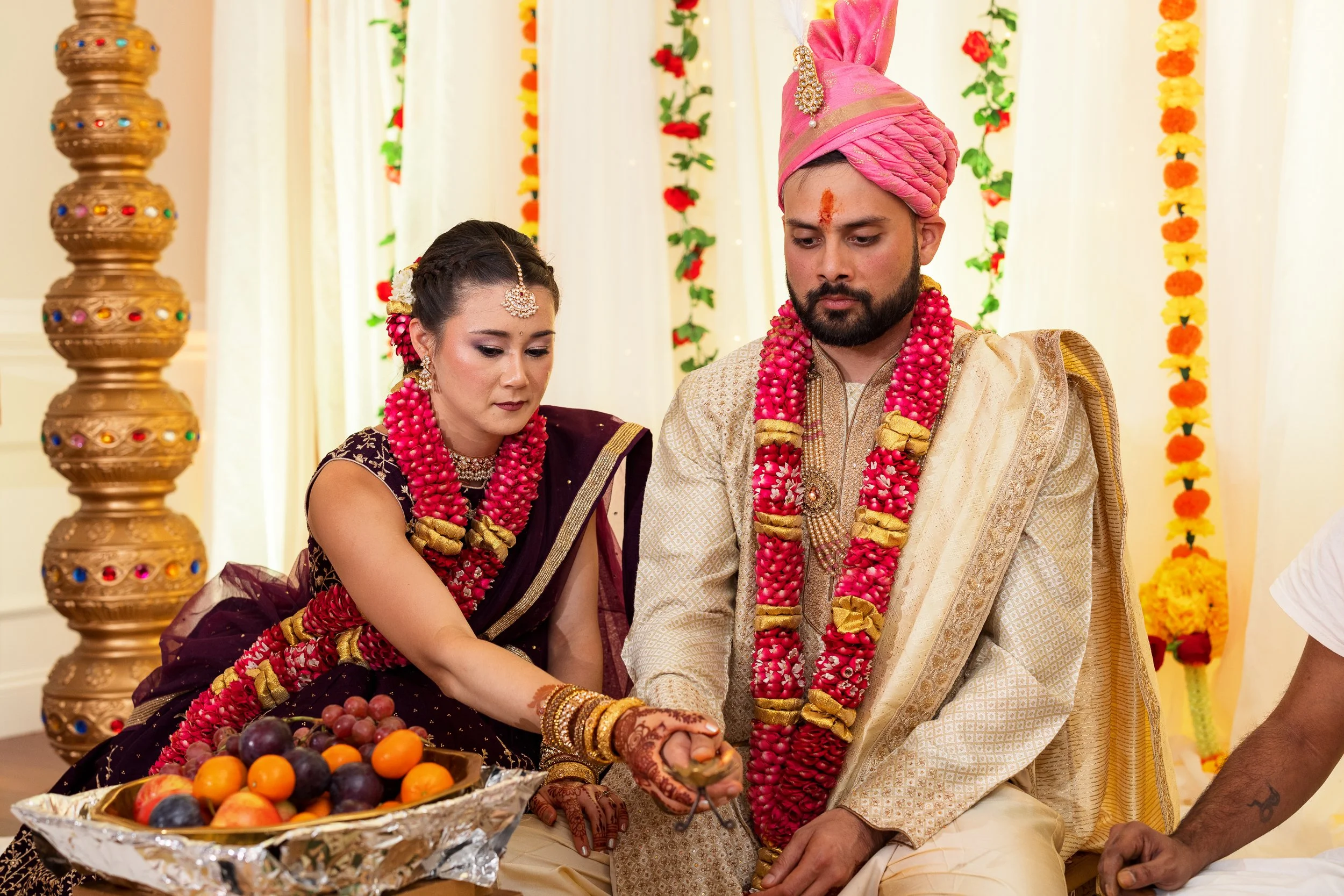
Inside, the front of the room was on the floor. The couple, both sets of parents, and
the priest, who had been flown in from India for it. Everyone else had chairs and there
was an aisle, which I was glad of, but the part that matters is on the ground and you
are on the ground with it, on your knees, trying to work without putting yourself in the
middle of somebody's ceremony.
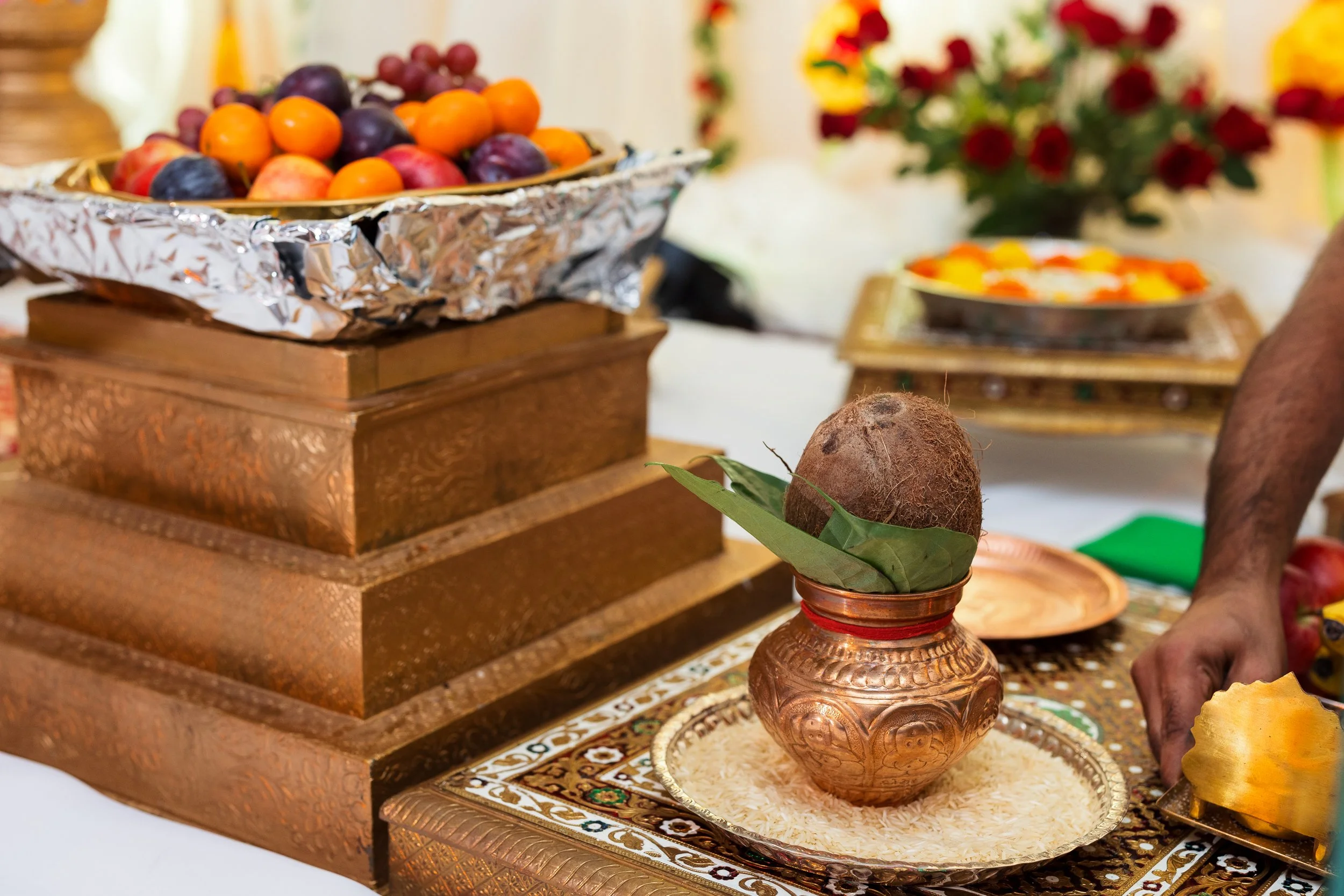
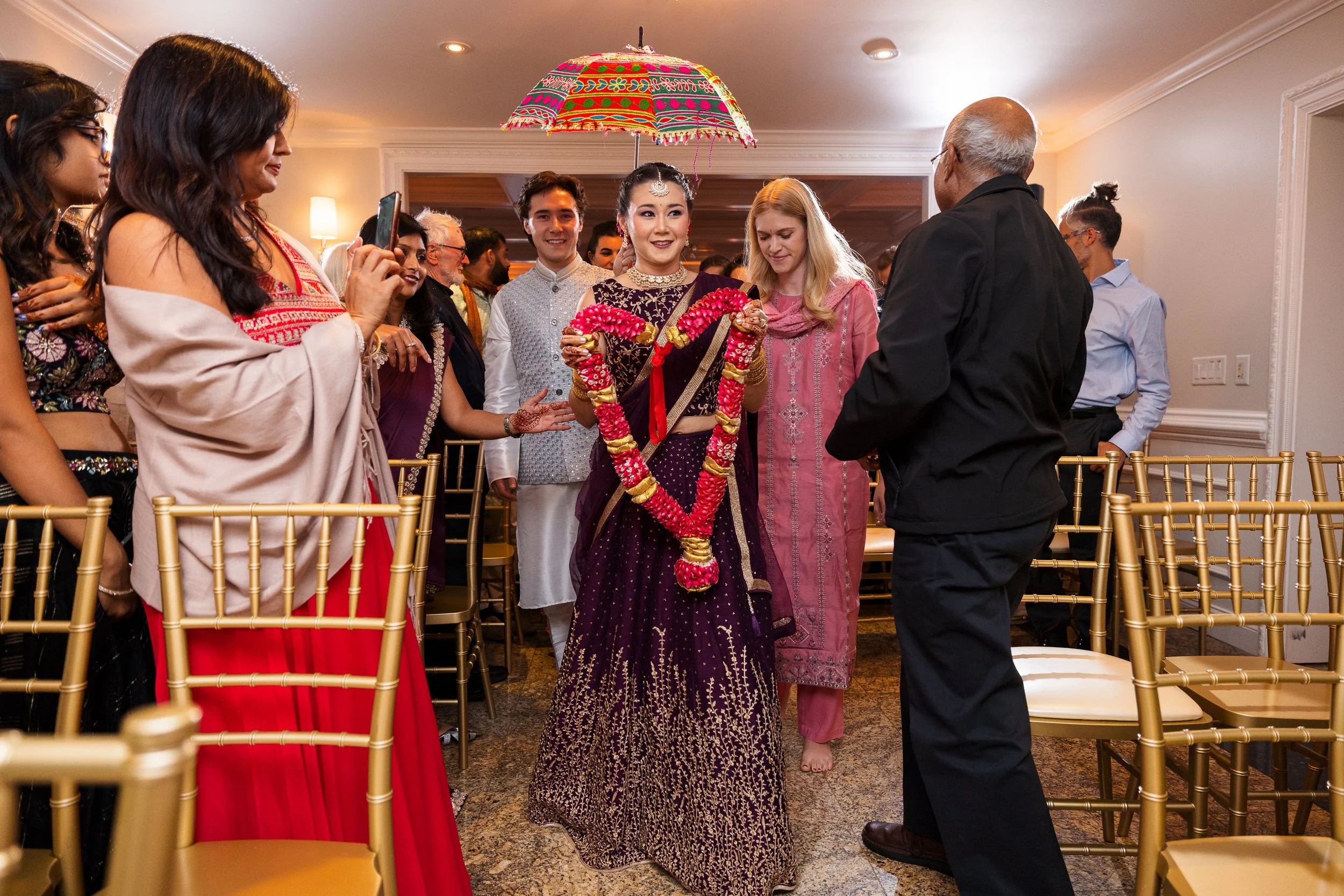
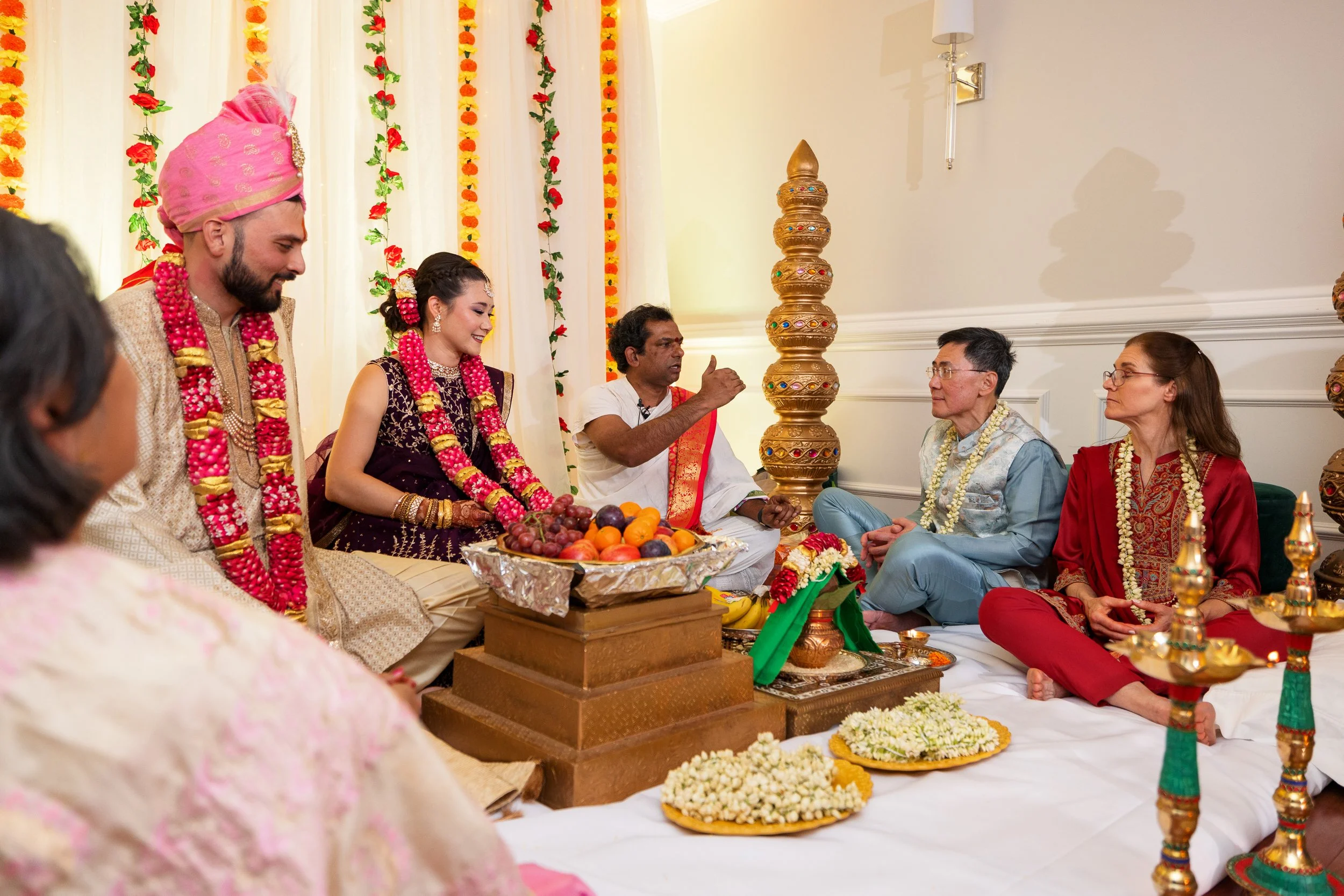
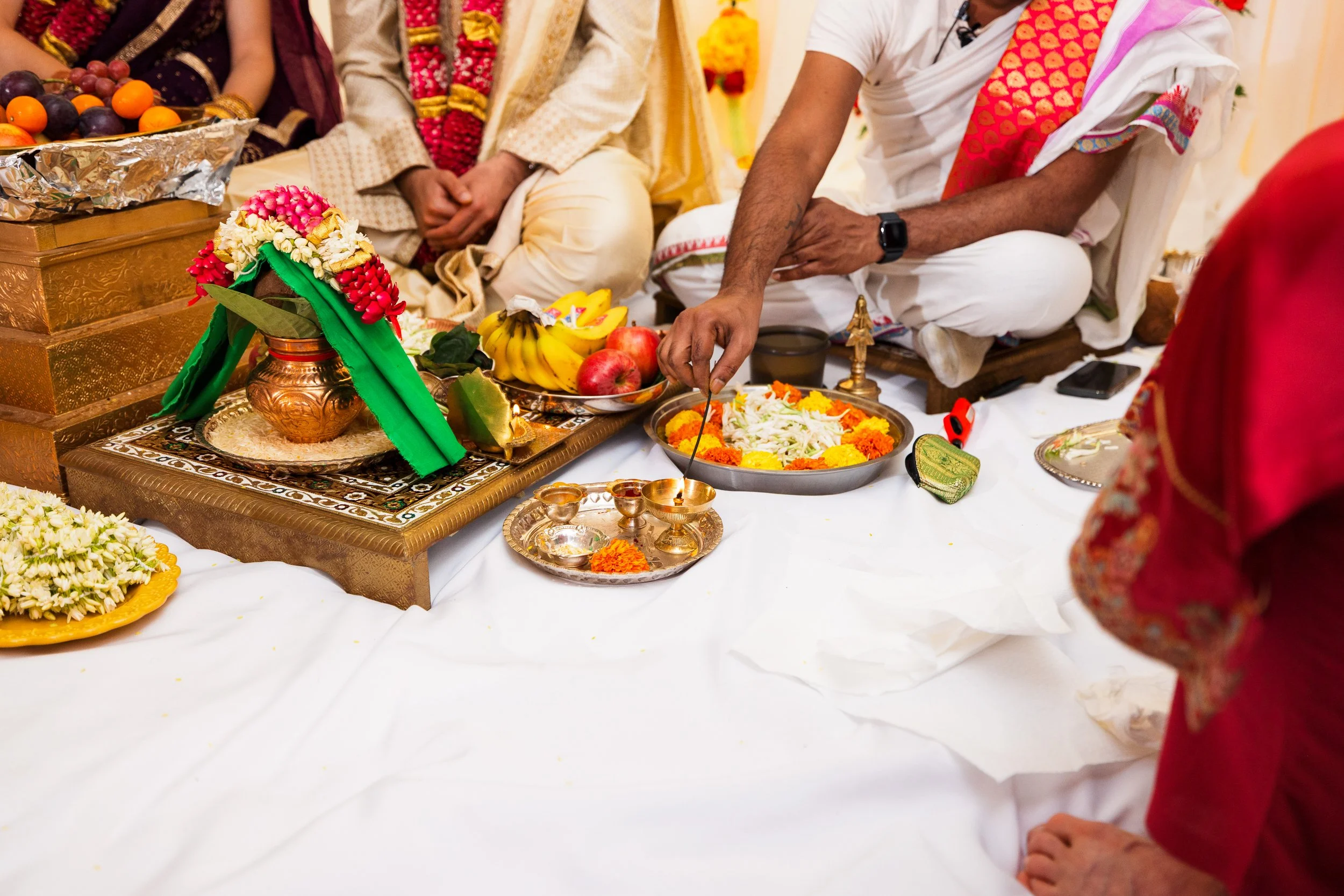
Garlands, several times over, passed and placed and exchanged. Offerings added to the
fire as it went, which set off the smoke alarms more than once, and nobody stopped. And
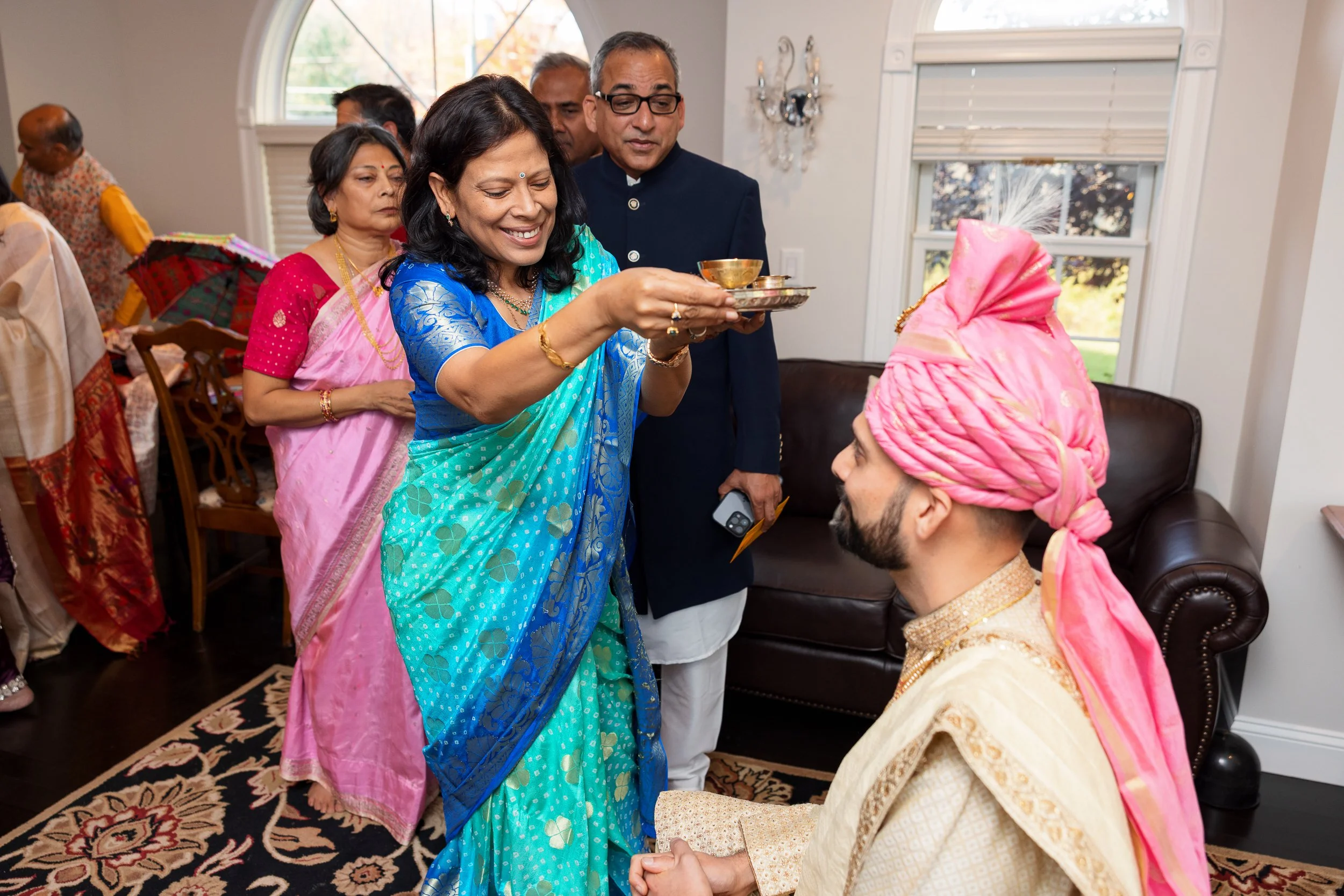
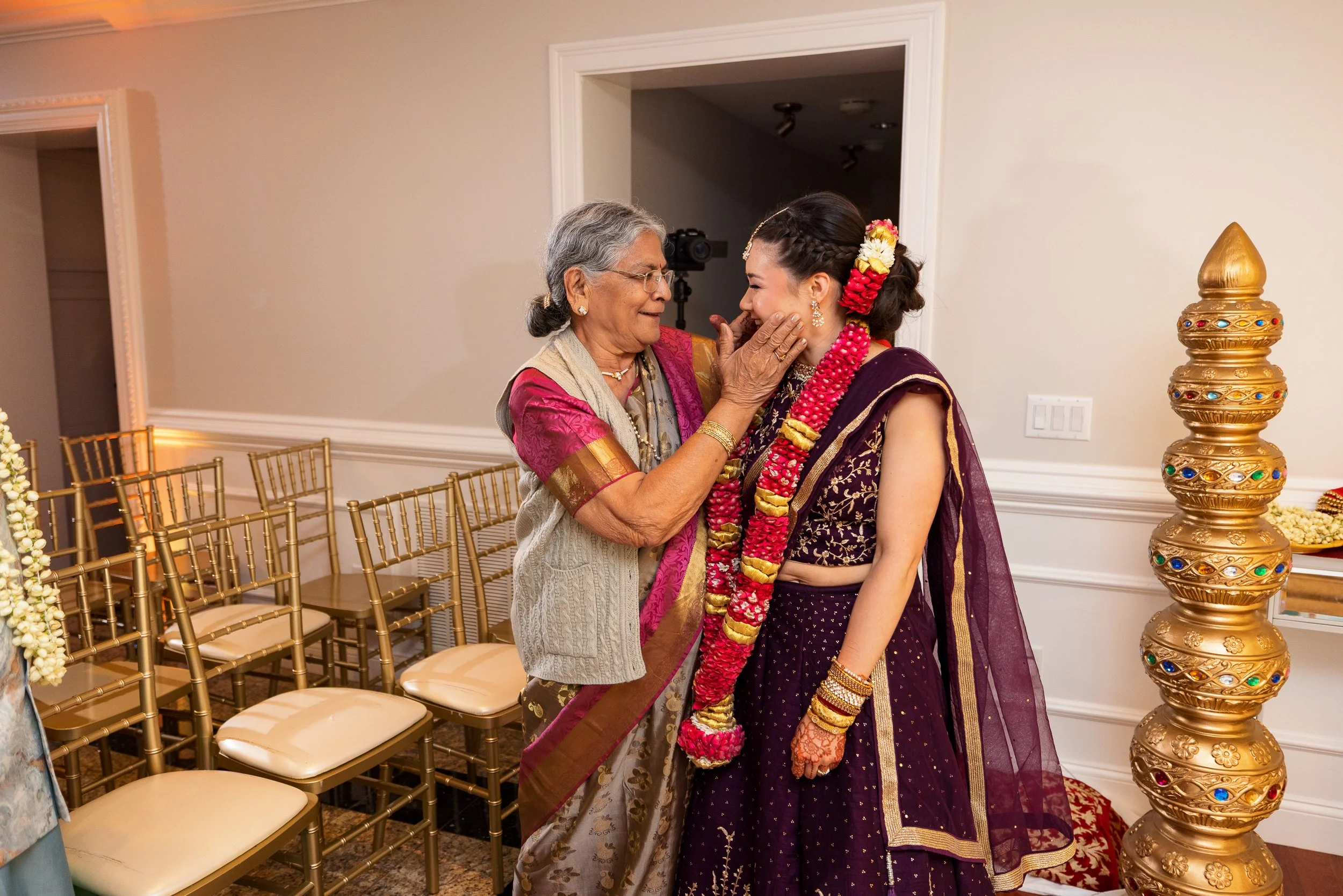
through all of it the older generation working steadily. Placing flowers on somebody's
head, straightening a turban, putting a small box into somebody's hands.
Afterwards they fed everybody. Indian food, cooked on site by caterers who knew what they
were doing. I ate standing up and I would do that Friday again for the food alone.
I did not understand a word of it. The ceremony was conducted in an Indian language and I
have no idea what the priest said at any point, which turns out to matter less than you
would think. What you can follow without the words is who it is about, and it is not only
the couple. Parents are in it constantly. Hands are placed on heads, garlands go on,
things are handed over and received. A Western ceremony puts two people at the front and
everybody else in rows behind them. This one had the families inside the thing itself.
Saturday: Saint Clements Castle
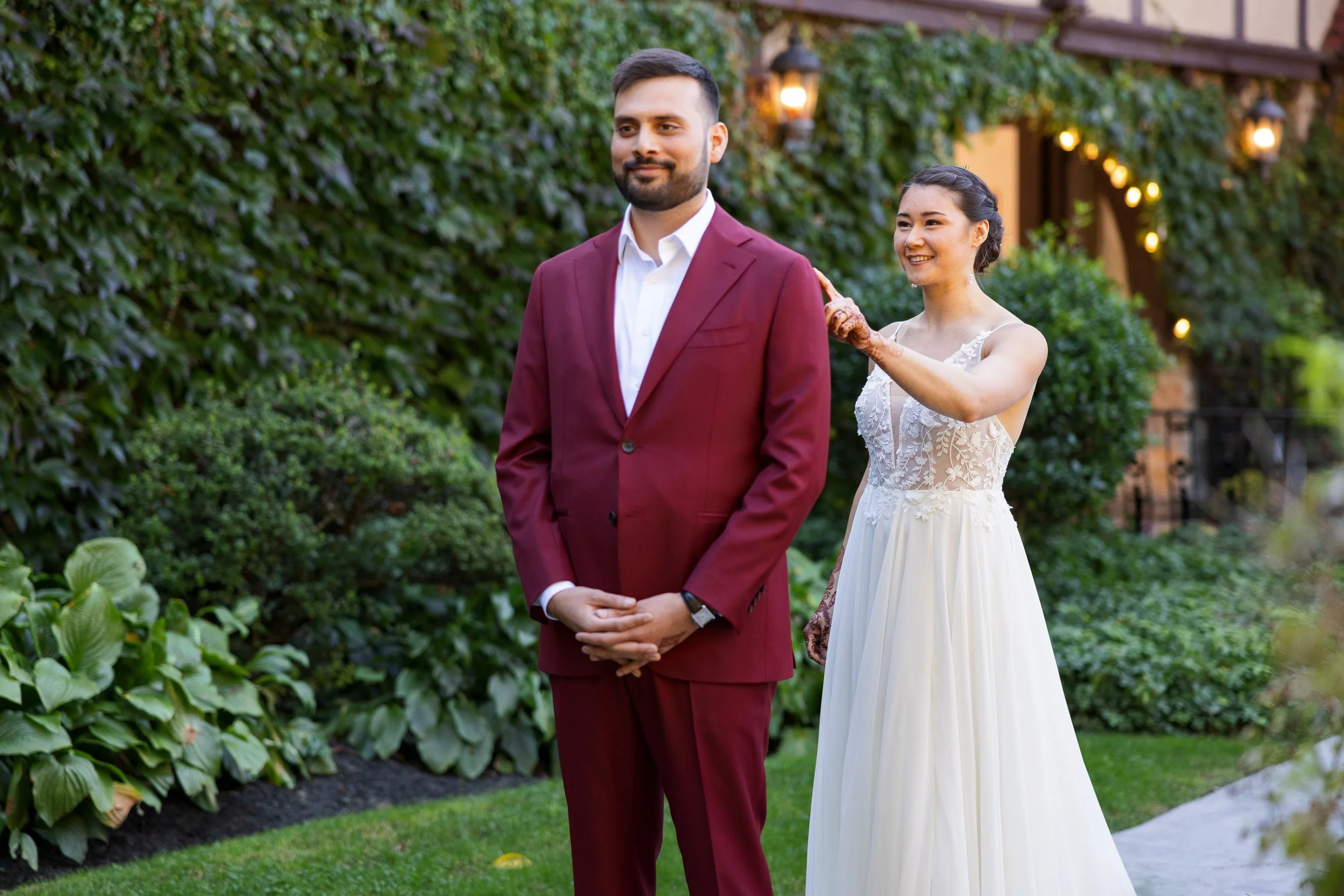
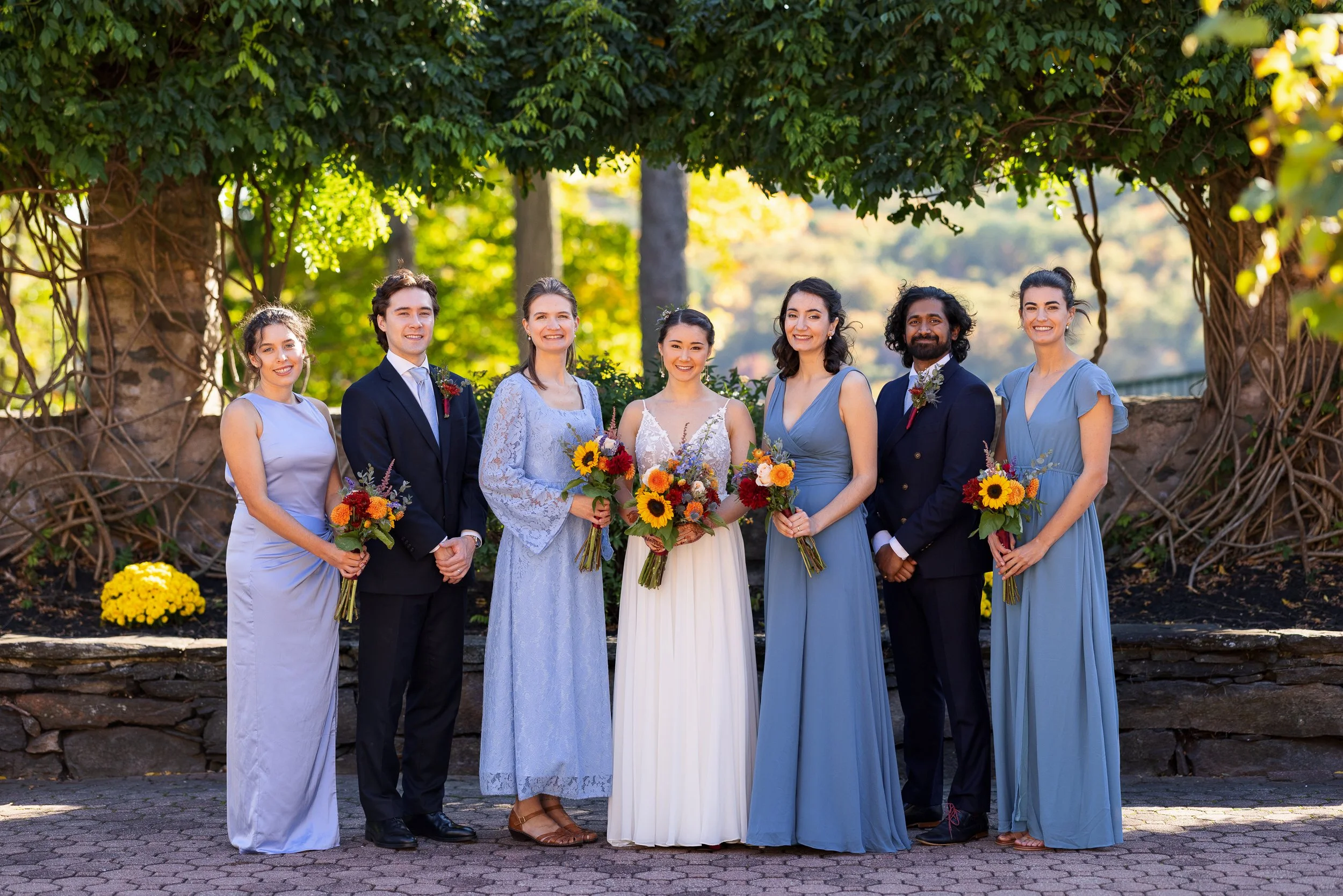
After two days of color, the third day is white lace, a maroon suit and sunflowers.
They saw each other before the ceremony, in an ivy-covered garden with the light going.
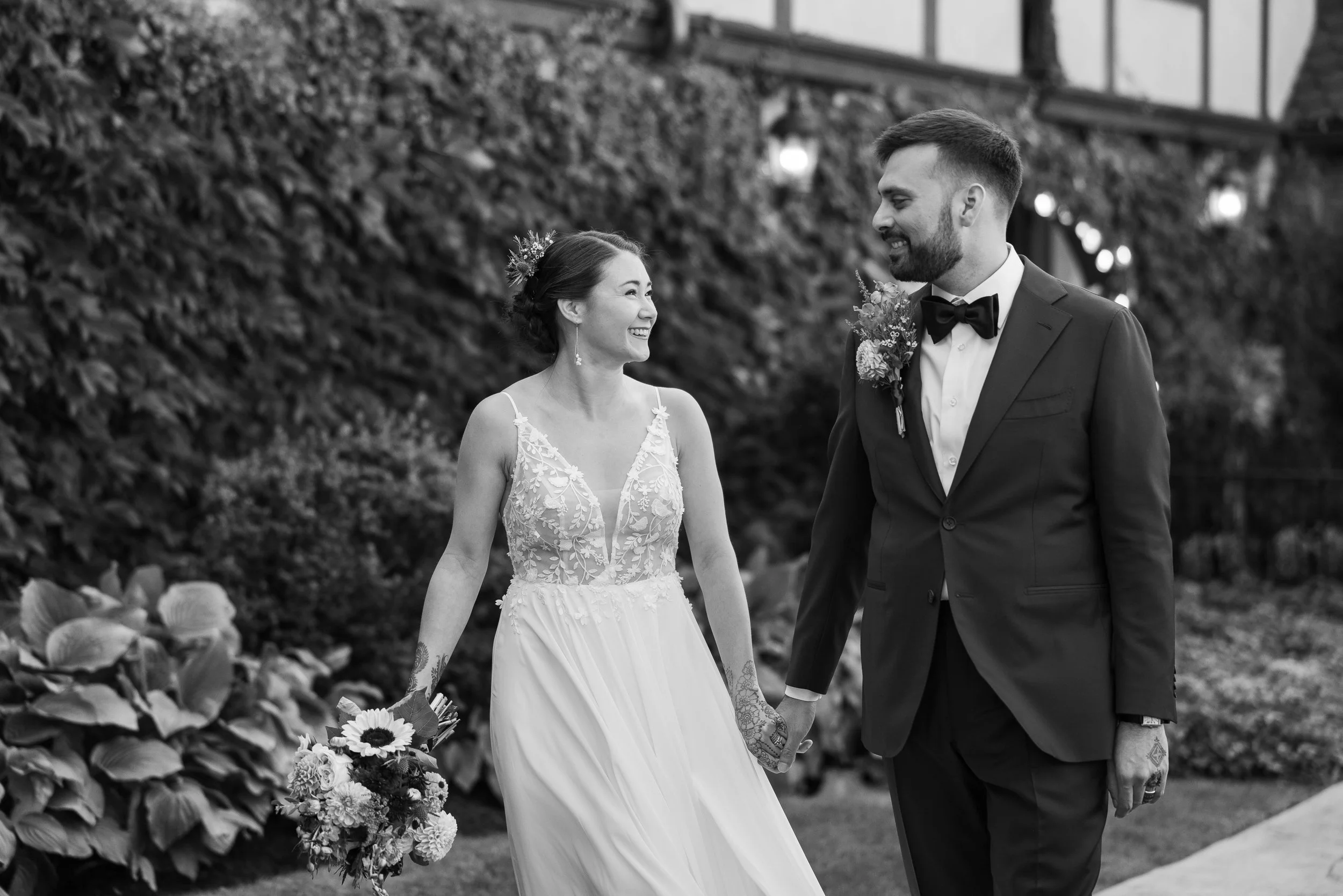
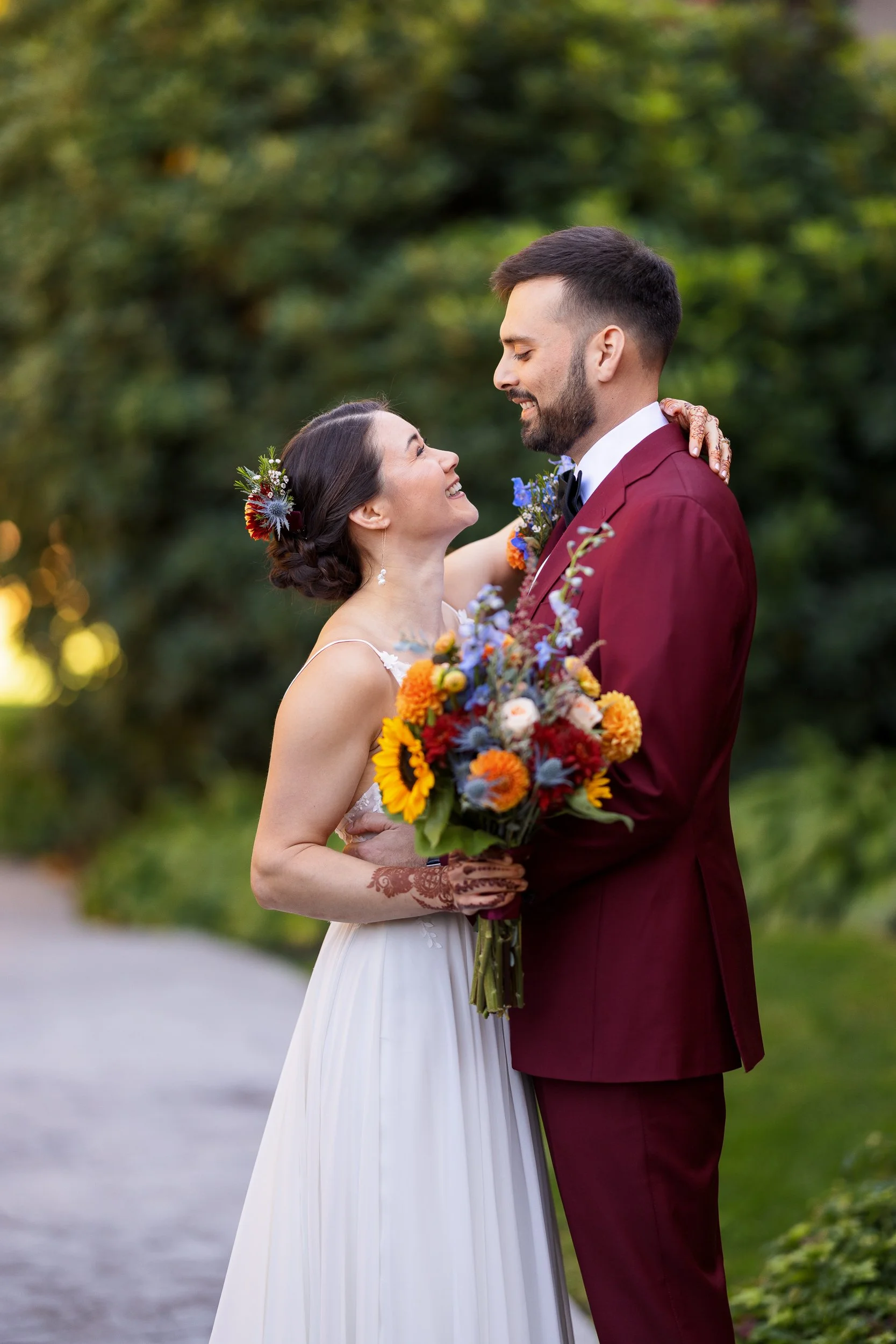
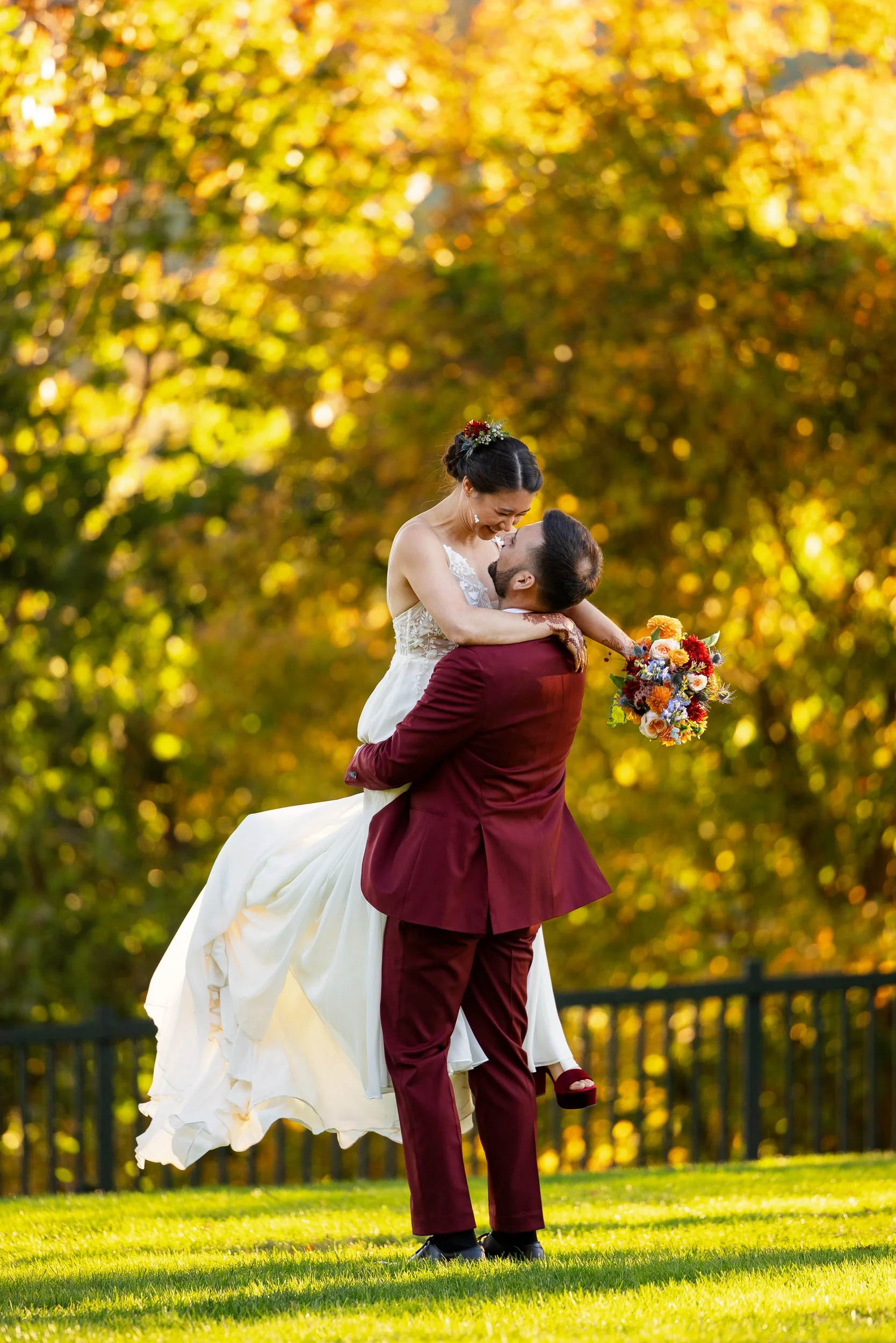
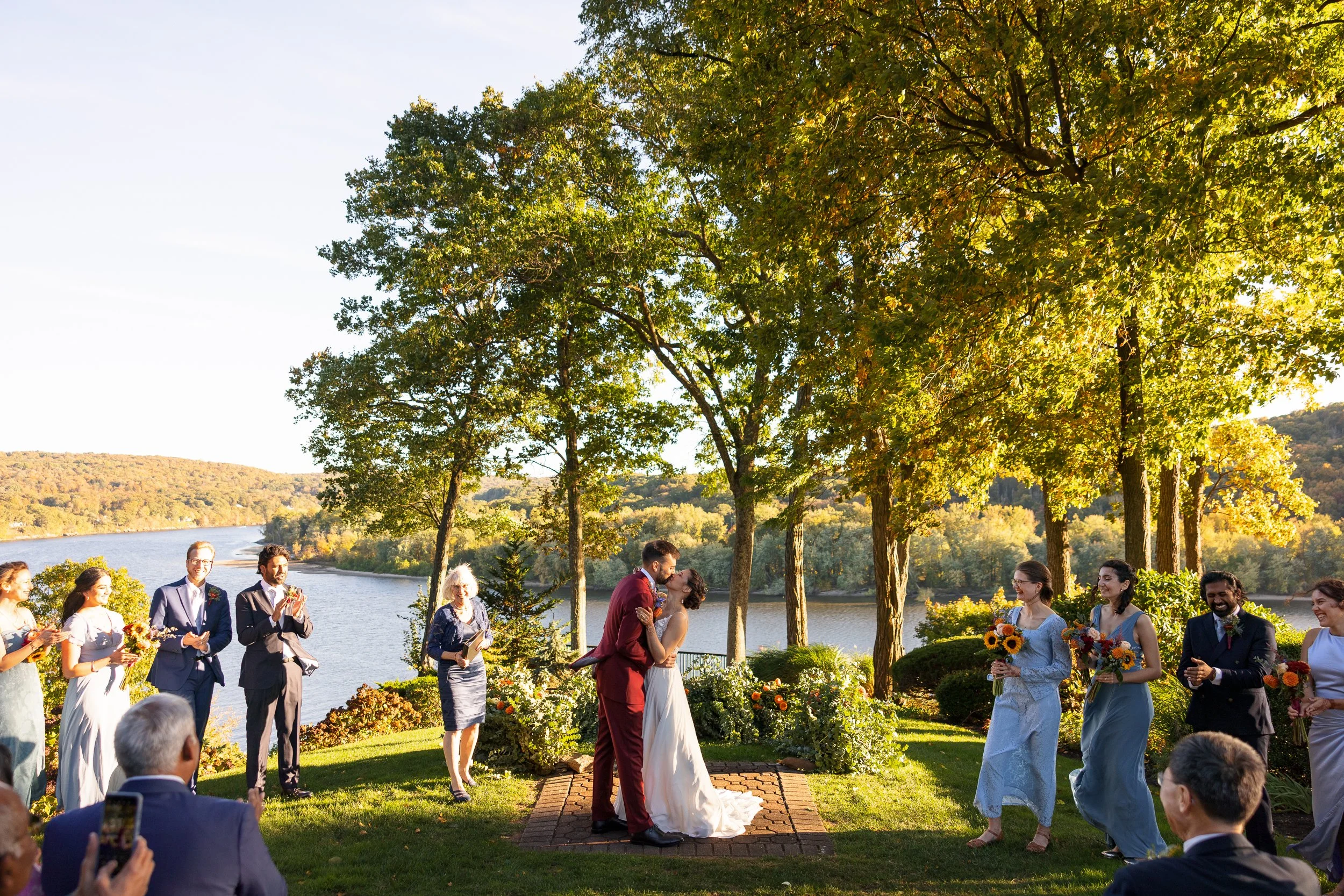
Saint Clements sits above the Connecticut River in Portland. The ceremony was on the
lawn with the water behind it, second week of October, with the trees doing what they do
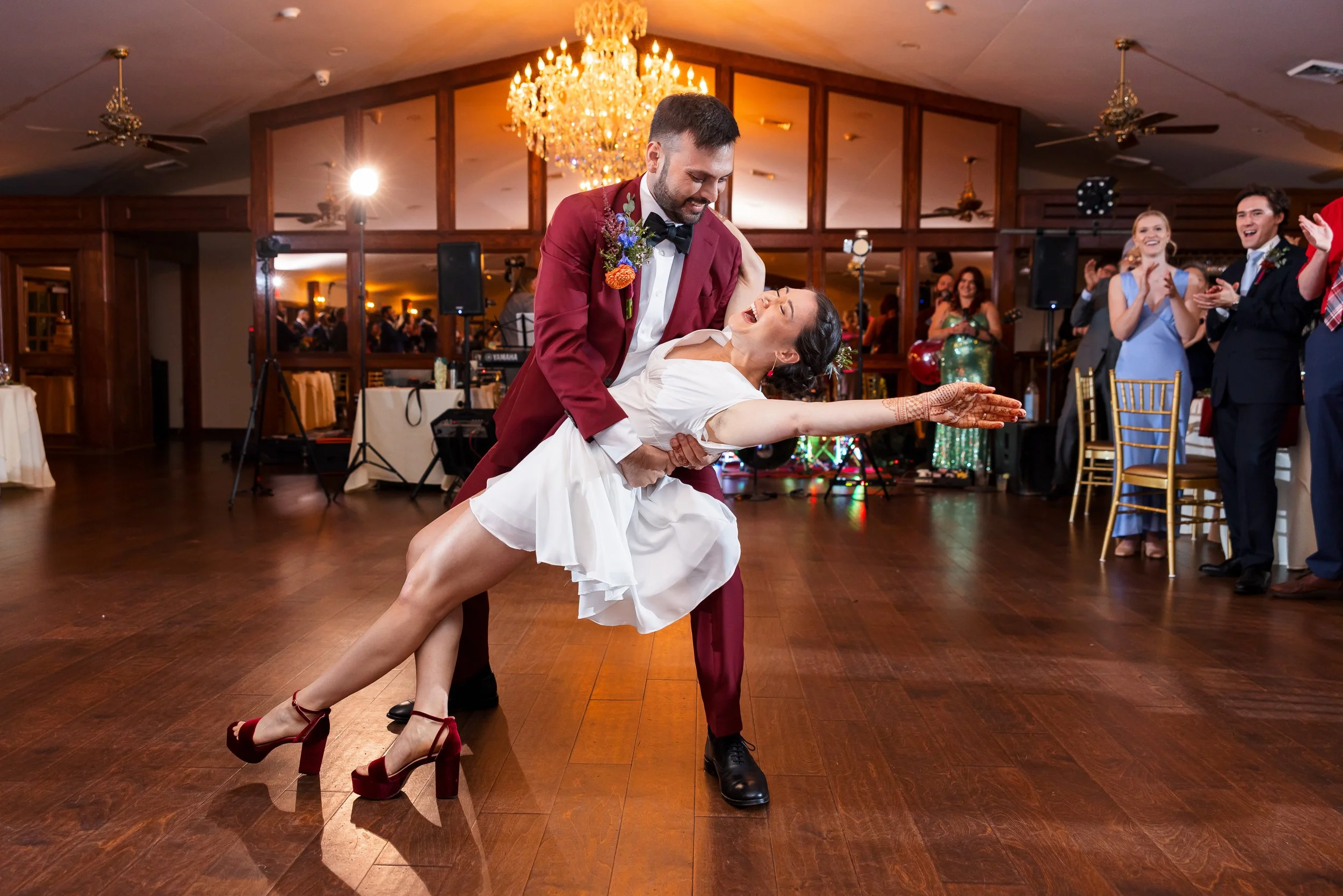
there in October. The reception was in the Waterford Room, one of two ballrooms inside the castle
itself. Their third space sits down by the river at the marina, in a building of its own.
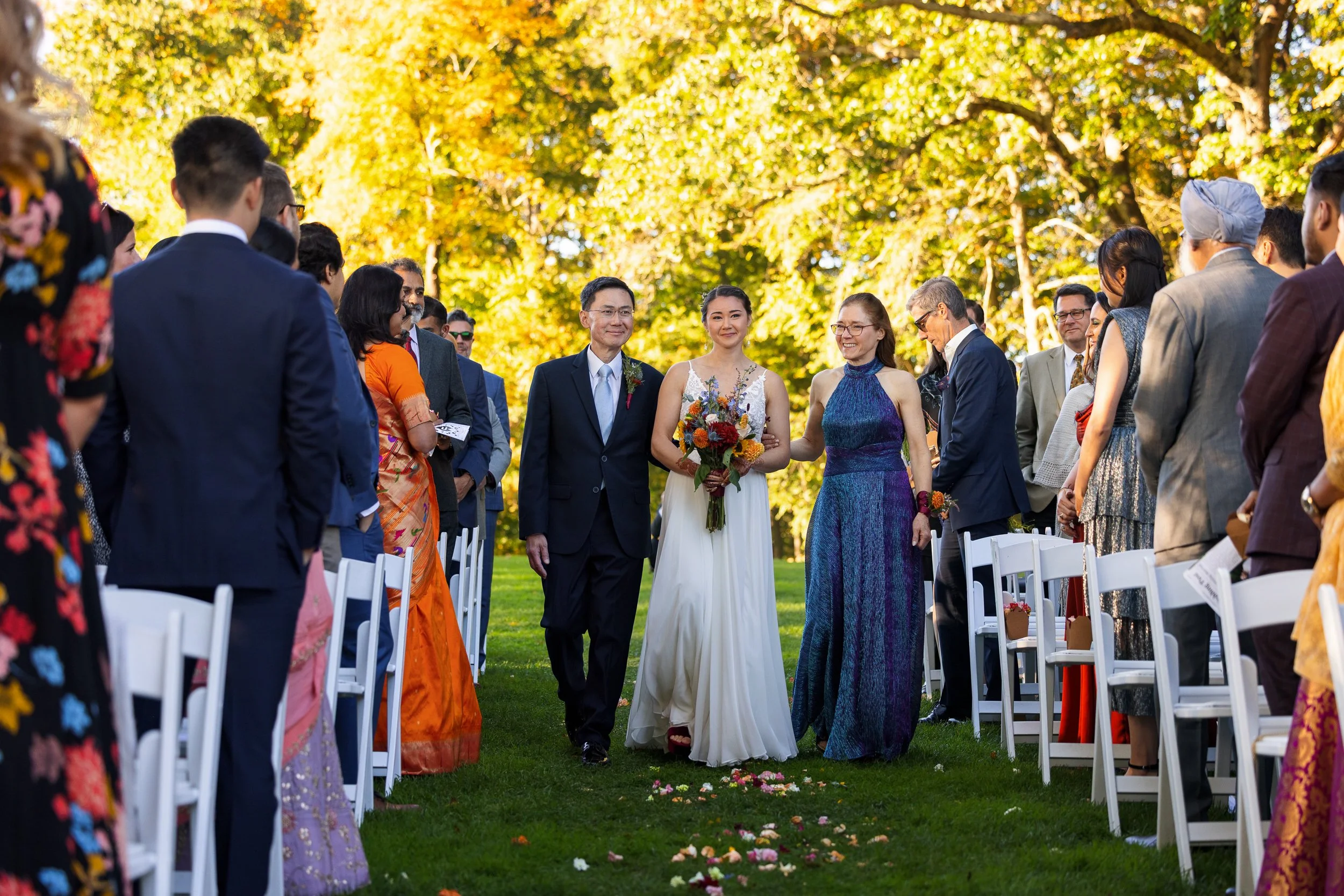
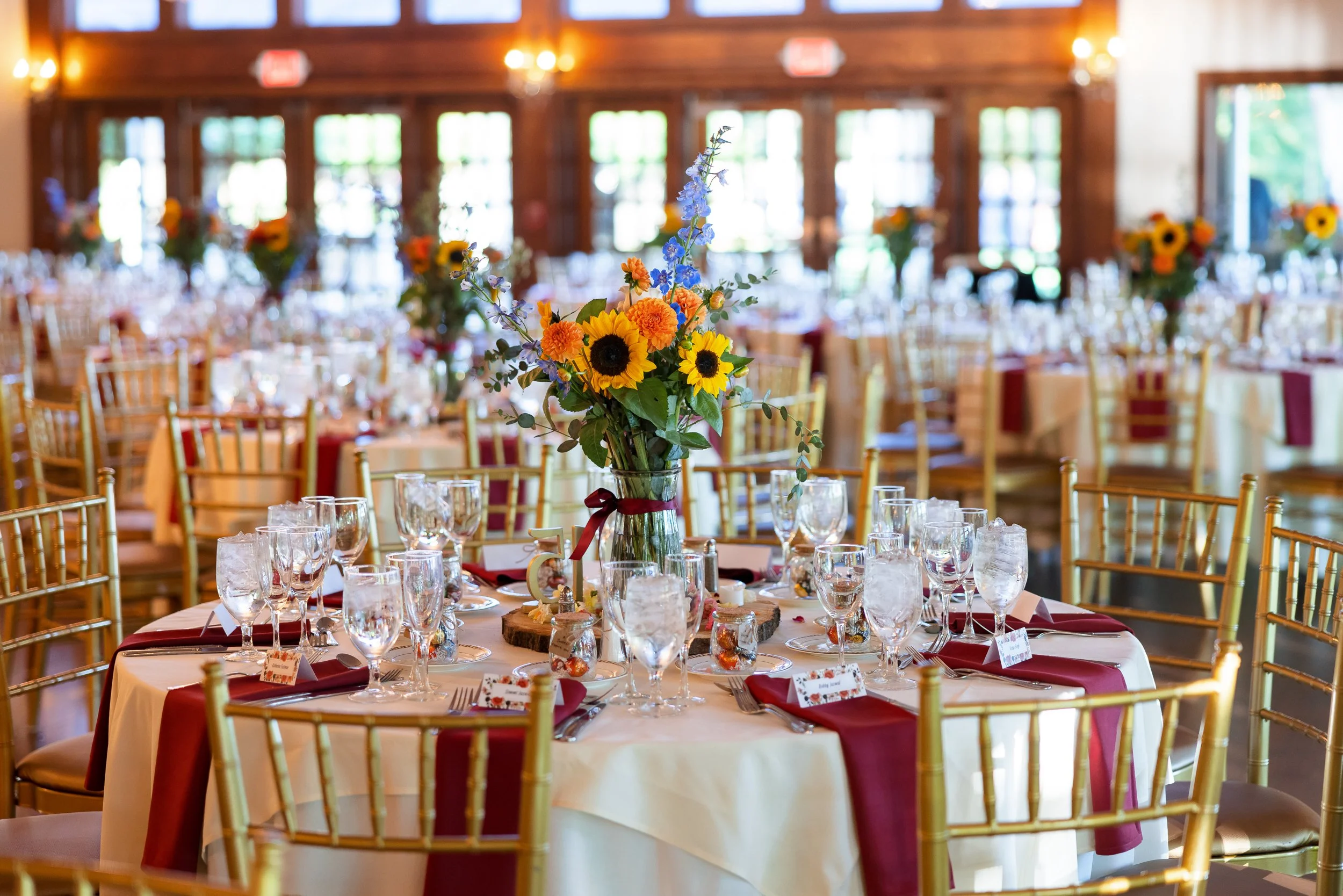
Sunflowers are an unusual choice for a castle and they were the right one. Against
burgundy linens and a ballroom with a chandelier in it, sunflowers are the thing in the
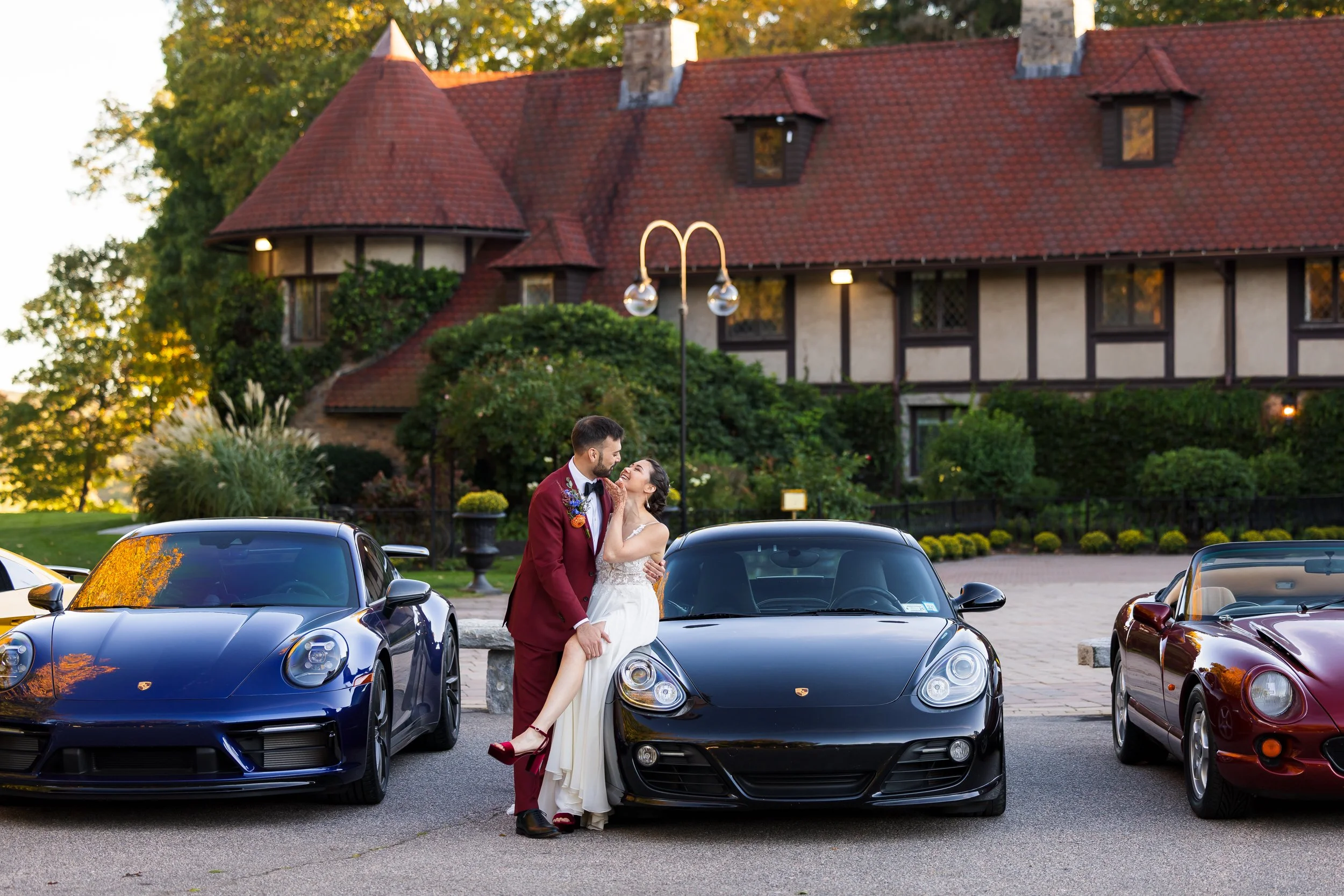
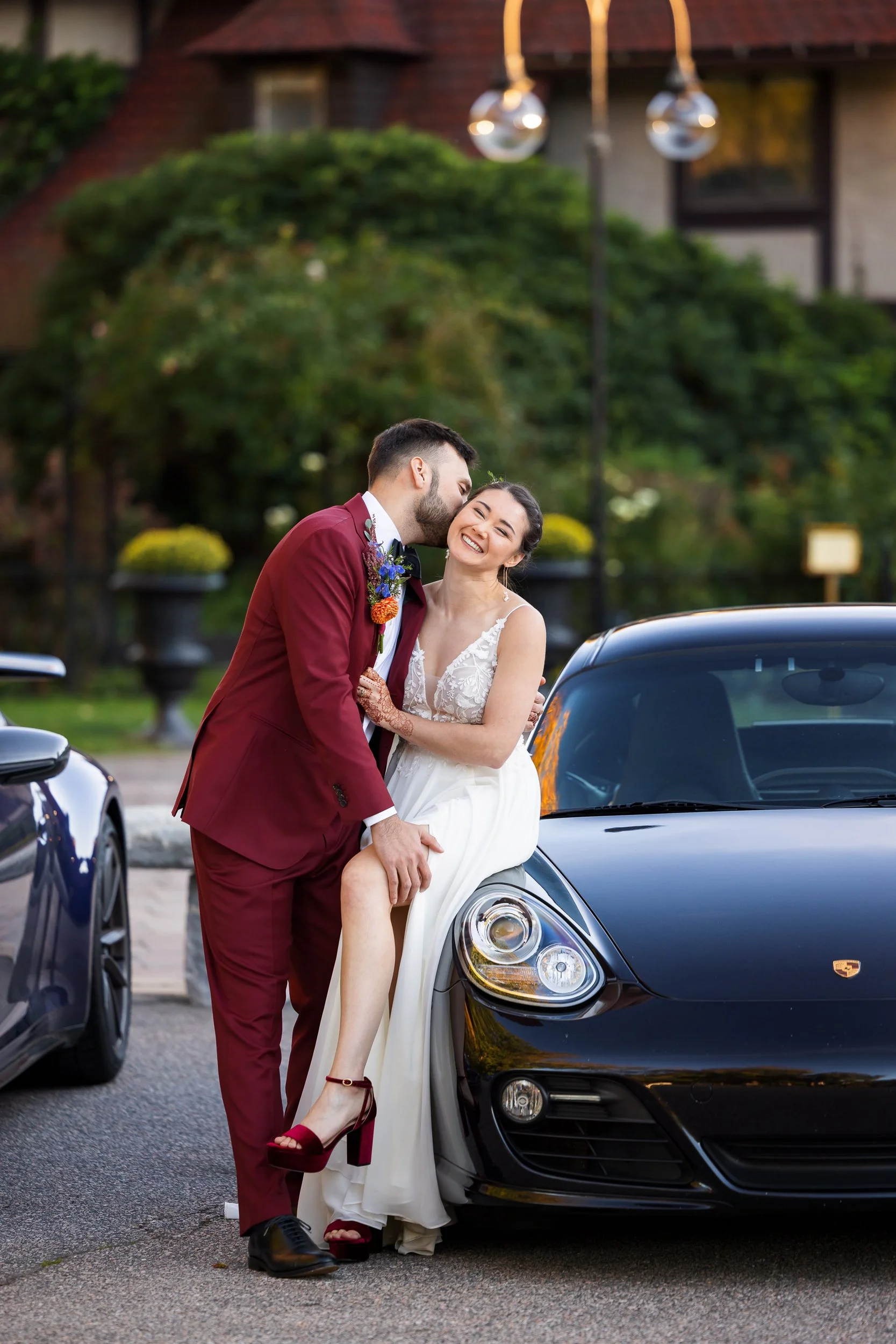
room that isn't taking itself seriously. Then there were the cars. Seven of them, give or take. The
groom's father had six of his own shipped up from Florida for the day: a Porsche GT3 RS, a GT4, an
Audi R8, and more behind them. A row of sports cars parked in front of a Tudor mansion is a
sentence I enjoy writing.
What three days actually does
I'll be honest about the tiring part first. Three days is three days. You are carrying the same bag up
the same stairs on Saturday that you carried on Thursday. Here's what you get for it. By Saturday
morning you are not the photographer any more. You know which uncle will organize everybody if
you ask him. You know the grandmother's name. You have already been on the floor in a room full
of somebody's family for two hours, which is not a thing a stranger does. Nobody performs for you
on day three. That is the whole reason those photographs look the way they do, and it isn't a
technique. It's just time.
If you're planning something like this
An Indian wedding is not one day with two extra evenings attached. Most photographers price a
three-day wedding as three separate jobs, because that is what it is. If you're planning a South
Asian wedding on the Gulf Coast, tell me the dates and what each day is, including the days you
think might not need a camera. Those are usually the ones that do. I photograph weddings in
Sarasota and across southwest Florida now. This one was in Connecticut, and it's still the best
argument I have for booking every day of a wedding rather than only the one with the dress.
